
English Literature · Notes
Literary Criticism
For more than two thousand years, thinkers have asked what literature is, what it is for and how it should be read. These notes gather their answers, section by section — the history of criticism, the main schools of theory, and the terms you need for your exams.
History of Literary Criticism
Criticism in order of time, from the Greeks to about 1960. The series has two layers: first the period articles, then articles on the main critics of each period. Articles become clickable as each one is written.
Introduction to Literary Criticism
What criticism is, what critics do, its main kinds, and a map of the whole history.
Classical Criticism
Plato · Aristotle · Horace · Longinus
Renaissance Criticism
Sidney · Gosson · Puttenham · Jonson
Neoclassical Criticism
Dryden · Pope · Addison · Johnson
Romantic Criticism
Wordsworth · Coleridge · Shelley · Hazlitt
Victorian Criticism
Arnold · Ruskin · Pater · Wilde
Early Twentieth Century
Bradley · T. S. Eliot · I. A. Richards
Mid Twentieth Century
Empson · Leavis · the New Critics · FryeLiterary Theory
The modern schools that ask how a text and its meaning work. The series runs in eight parts, in a rough order of time and of argument: each part answers, or quarrels with, the one before it. Open a part to see its chapters.
 Part 1
Form, language and structure
The schools that look inside the text first — at its form, its language and the system of rules that lets it mean anything at all.
 Part 2
Reader and meaning
Theory turns to the person holding the book, and asks how understanding itself happens.
 Part 3
Beyond structure
The same thinkers who built the structures begin to take them apart, and meaning stops standing still.
 Part 4
Society, history and culture
Reading literature as the work of a class, a market and a moment in history.
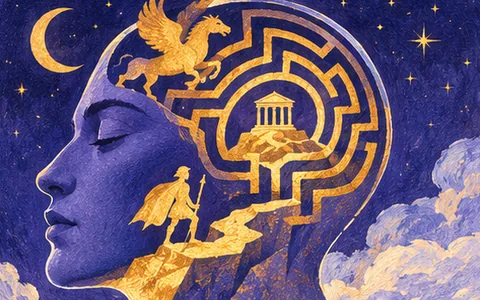 Part 5
Mind and myth
What literature owes to the unconscious, and the old story patterns that keep returning in new books.
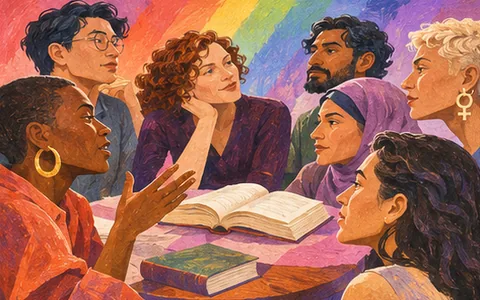 Part 6
Gender and sexuality
From asking where the women writers went to asking what gender itself is, and who was left out of the first answers.
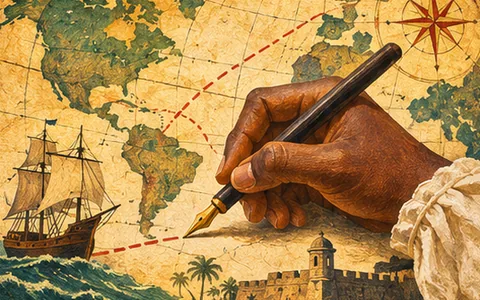 Part 7
Empire, race and postcolonial thought
Empire, the writing it produced and the writing that answered back — and how a nation and a race get imagined.
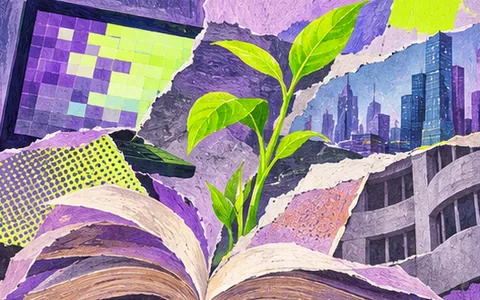 Part 8
Postmodern and contemporary
The theory of our own time: after the grand stories, and out past the human being and the single language.
Cultural Studies
Culture itself as the subject, not only books: how the field began, the Birmingham school, ideology and hegemony, class and taste, popular culture, media and audiences, subculture, gender, race, and diaspora and globalisation. Open a part to see its chapters.
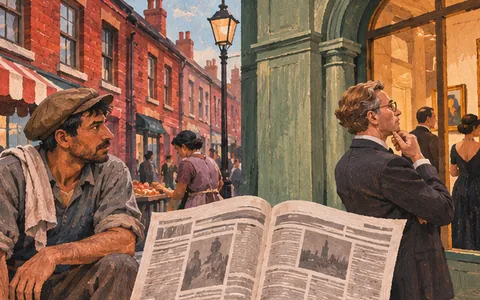 Part 1
Culture, class and ideology
Culture seen as a whole way of life, as a field where ideas and power meet, and as a sign of class and taste.
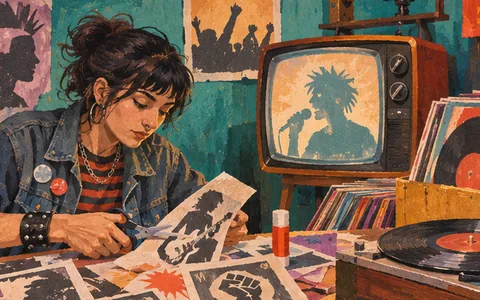 Part 2
Popular culture, media and subculture
Mass and popular culture as the subject: the culture industry, what people watch, read and wear, and the media that carry it.
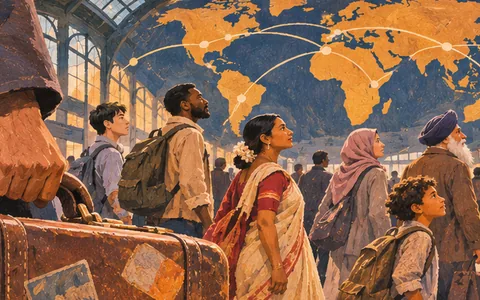 Part 3
Identity, diaspora and globalisation
How gender, race and nation shape who people are and how they show it, and how identity moves across borders in a global world.
Indian Poetics
The Sanskrit tradition of poetics, from Bharata's treatise on drama to the great summaries of poetry, with Bhartrhari and the Tamil Tolkappiyam, then bhakti, Persian and Hindi thought and modern and contemporary Indian aesthetics. Open a part to see its chapters and what each one covers.
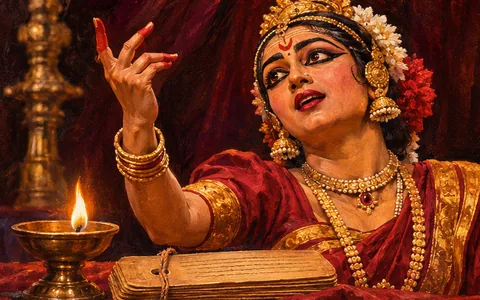 Part 1
Drama, rasa and the schools
Bharata's treatise on drama, the oldest text of the tradition that has come down to us, the ten types of Sanskrit play, the great Sanskrit dramatists, and the theory of rasa and how later thinkers read it.
 Part 2
Alankara, guna and riti
The early schools that looked for what makes poetry beautiful in figures of speech, in qualities of style and in the manner of writing.
 Part 3
Dhvani, vakrokti and auchitya
The schools that asked what makes poetry poetry: suggestion, oblique expression and propriety, and how Abhinavagupta joined rasa and dhvani.
 Part 4
Later systems and other traditions
The two great summaries of Sanskrit poetics, Bhartrhari's philosophy of language, and the Tamil poetics of the Tolkappiyam.
 Part 5
Medieval Indian thought
Bhakti, Persian and Hindi thinking about poetry, from Jnanesvara to Keshavadasa, and Al-Badaoni on writing history.
 Part 6
Modern Indian aesthetics
Poets, novelists and thinkers, from Ghalib to Suresh Joshi, who reshaped Indian ideas of beauty, art and criticism.
 Part 7
Nativism, the margins and the contemporary
Challenges to the old canon: nativism, the Hungry Generation, folk and tribal art and Dalit aesthetics, and what Indian poetics means today.
Key Terms & Concepts
A plain-English glossary of the terms used across criticism and theory, from simile and sonnet to mimesis, catharsis, canon and close reading. Open a part to see its chapters and the terms each one explains.
 Part 1
Figures of speech
Ways of using words beyond their plain meaning: comparison, substitution, exaggeration, contrast, symbol and irony.
 Part 2
Sound, metre and rhyme
How a poem sounds and moves: sound devices, repetition, metre and feet, lines, rhyme and stanzas.
 Part 3
Poetic forms
The named shapes of poetry, from the sonnet and the ode to the epic, the ballad and the haiku.
 Part 4
Genres and modes
The kinds of literature: the forms of drama, the kinds of fiction, imaginative modes and life writing.
 Part 5
Drama and narrative
The terms for how a play is built and how a story is told: plot, character, stage conventions, narrators and techniques.
 Part 6
Rhetoric and general terms
Terms of persuasion, imitation and taste, and the basic words of criticism: canon, genre, trope and palimpsest.
 Part 7
Terms of criticism
The key terms of classical, Indian and formalist criticism, from mimesis and catharsis to close reading.
 Part 8
Terms of modern theory
The key terms of structuralism, post-structuralism, psychoanalysis, Marxism, feminism, reader-response, new historicism and postcolonial theory.