

On this page
- The world of Renaissance criticism
- The Puritan attack and early English voices
- Sir Philip Sidney: An Apology for Poetry
- Handbooks, rhyme, and the English language
- Ben Jonson: classicism on the English stage
- How Renaissance criticism shaped what came after
- Critics and works
- Quick revision - 50 points
- Quick quiz - 25 questions
- Frequently asked questions
- Sources
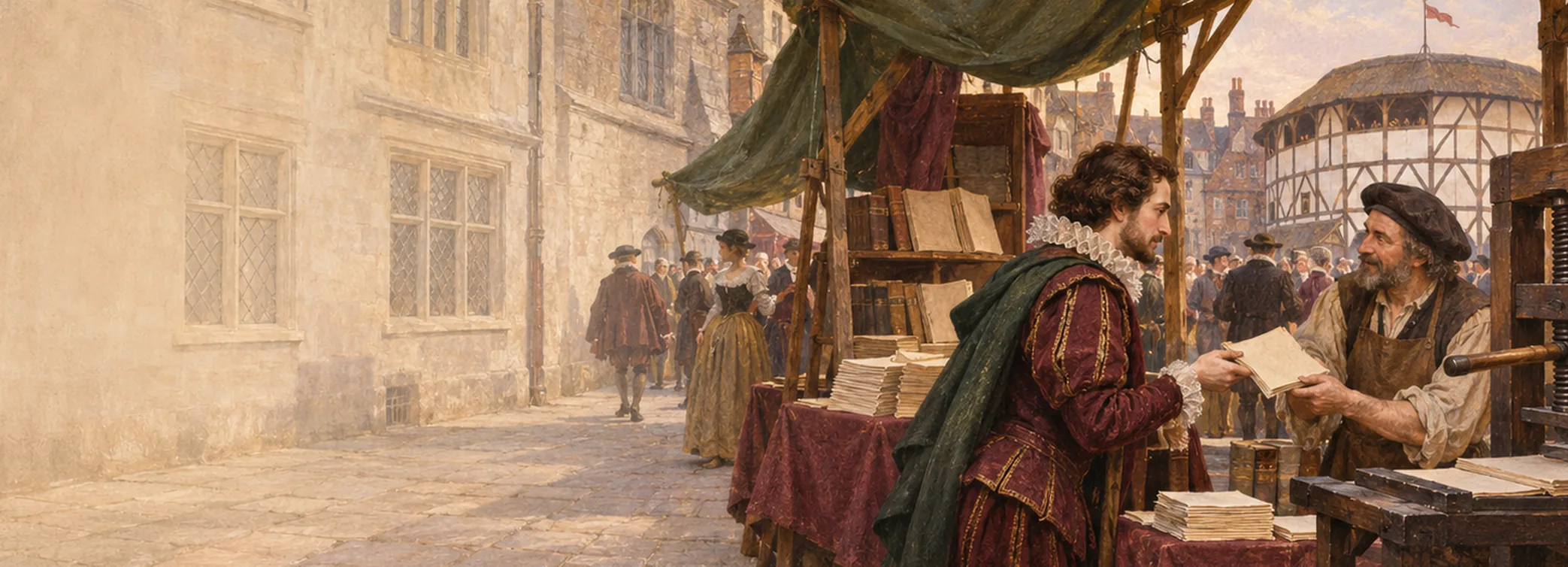
Picture London in the late sixteenth century. New public playhouses are rising just outside the city walls, and cheap printed pamphlets are selling in the bookstalls around St Paul's. Some pamphlets attack poets and actors as a danger to public morals. Others answer back, trying to prove that English verse can stand beside the Greek and Latin classics. Out of these lively quarrels, English literary criticism was born.
Several names stand for this age. Stephen Gosson put poetry and the stage on trial. Sir Philip Sidney answered him with An Apology for Poetry, the first great work of English criticism. George Puttenham wrote a full handbook on poetic craft and ornament. Thomas Campion and Samuel Daniel argued over whether English poets should keep rhyme or copy classical metres. Francis Bacon mapped the place of poetry among the branches of human learning. Finally, Ben Jonson brought a firm, practical classicism to English drama and verse.
This is the third article in the series on the history of English literary criticism. In the previous article, we met Plato, Aristotle, Horace and Longinus. Renaissance critics read those ancient writers with fresh excitement, yet they did not merely repeat them. They borrowed classical ideas to solve urgent English problems: how to defend poetry against moral attack, and how to turn English into a great literary language.
The world of Renaissance criticism
The rediscovery of the ancients
Renaissance criticism began in Italy before it reached England. The invention of printing and the revival of classical learning brought ancient critical texts back into circulation. Giorgio Valla published a Latin translation of Aristotle's Poetics in 1498, and the Aldine Press printed the Greek text in 1508. Italian scholars soon wrote major commentaries and treatises of their own. Antonio Minturno published De Poeta in 1559. Julius Caesar Scaliger's Poetices libri septem appeared posthumously in 1561 and became a favourite guide for European poets. Lodovico Castelvetro's Italian commentary on the Poetics followed in 1570, setting out the famous three unities of action, time and place.
In France, Joachim du Bellay published La Défense et illustration de la langue française in 1549. He urged French poets to enrich their own native tongue rather than write only in Latin. English critics learned from both Italy and France. They took their respect for rules and genres from the Italians, and their pride in the mother tongue from the French.
Why English critics had to speak up
English criticism in the sixteenth century grew out of two real anxieties. The first was moral. Puritan preachers and city authorities viewed the new London theatres with deep suspicion. They echoed Plato's old charges, claiming that plays and poems wasted time, told lies and stirred up unruly passions. Poets had to prove that their art made citizens better, not worse.
The second anxiety was linguistic and technical. Many educated men still thought Latin was the only language fit for serious writing, and that English was rough and unpolished. Critics therefore wrote manuals to teach poets how to handle English metre, rhyme and figures of speech. They wanted to show that English could be as orderly and dignified as Greek or Latin.
A map of the age
In Abrams's map of critical theories, Renaissance criticism sits between the mimetic view and the pragmatic view. Following Aristotle, Renaissance critics describe poetry as imitation. Following Horace, they insist that poetry must both teach and delight. Yet something new also begins to stir. When Sidney calls the poet a "maker" who creates a golden world better than nature's brazen one, he gives the poet a creative dignity that prepares the ground for much later Romantic ideas.
Did you know?
Stephen Gosson dedicated his fierce attack on poetry, The School of Abuse (1579), directly to Sir Philip Sidney—without asking Sidney's permission. Sidney was a poet and a patron of poets, so the dedication was an awkward blunder. As Edmund Spenser later hinted in a letter, Gosson was "for his labour scorned".
Important points to remember
- Renaissance criticism began in Italy before spreading to France and England.
- Valla's Latin translation of the Poetics appeared in 1498, and the Aldine Greek text in 1508.
- Major Italian critics include Minturno (De Poeta, 1559), Scaliger (Poetices libri septem, 1561) and Castelvetro (1570).
- Joachim du Bellay defended the French vernacular in 1549, inspiring English pride in the mother tongue.
- English Renaissance criticism grew out of two needs: answering Puritan moral attacks and proving the worth of the English language.
- In Abrams's map, Renaissance criticism blends the mimetic view (Aristotle) with the pragmatic view (Horace).
- Stephen Gosson dedicated The School of Abuse (1579) to Sir Philip Sidney without permission.
The Puritan attack and early English voices
Before Sidney wrote his famous essay, a handful of humanist scholars and pamphleteers laid the early foundations of English criticism.
Humanists and early handbooks
Roger Ascham (1515-1568), who had been tutor to Princess Elizabeth, wrote The Scholemaster, published posthumously in 1570. It is mainly a book on teaching Latin through "double translation", yet it contains sharp literary remarks. Ascham praised classical restraint, warned against the moral dangers of Italian romances, and disliked rhyme as a barbarous habit left over from the Middle Ages.
Five years later, the poet George Gascoigne (c. 1535-1577) published Certayne Notes of Instruction concerning the Making of Verse or Ryme in English (1575). It is a short, practical essay, and it holds a special place in literary history as the first treatise in English devoted entirely to the craft of versification. Gascoigne urged poets to find a good "invention" or central idea first, to keep their accents natural, and to favour plain English words over inkhorn terms.
Stephen Gosson and The School of Abuse
The calm tone of the early humanists was broken in 1579 by Stephen Gosson (1554-1624). Gosson had once written plays himself, but he turned against the theatre and became a clergyman. In The School of Abuse, he launched a lively attack on poets, pipers, players and jesters. Borrowing Plato's distrust of poetry and sharpening it with Puritan zeal, he called poets the fathers of lies and warned that plays corrupted morals and distracted citizens from honest work.
Gosson's pamphlet mattered less for the originality of its ideas than for the replies it provoked. By putting poetry on trial in plain English, he forced defenders of literature to state clearly why poetry deserved a place in society.
Thomas Lodge's quick reply
The first printed answer came quickly from Thomas Lodge (c. 1558-1625), who wrote A Defence of Poetry, Music, and Stage Plays in 1579 or 1580. Lodge argued that poetry had ancient dignity, that allegory hid moral truth beneath pleasing stories, and that plays could correct vice by holding it up to scorn. The authorities suppressed Lodge's pamphlet, though copies circulated privately. Gosson replied with Playes Confuted in Five Actions (1582). Meanwhile, a far greater answer was already taking shape in manuscript.
Important points to remember
- Roger Ascham's The Scholemaster (1570) praised classical models, warned against Italian influence and disliked rhyme.
- George Gascoigne's Certayne Notes of Instruction (1575) is the first English treatise on versification.
- Stephen Gosson published The School of Abuse in 1579, attacking poets, music and the stage.
- Gosson was a former playwright who turned against the theatre.
- Thomas Lodge answered Gosson with A Defence of Poetry, Music, and Stage Plays (1579/1580).
- Gosson replied to Lodge in Playes Confuted in Five Actions (1582).
Sir Philip Sidney: An Apology for Poetry
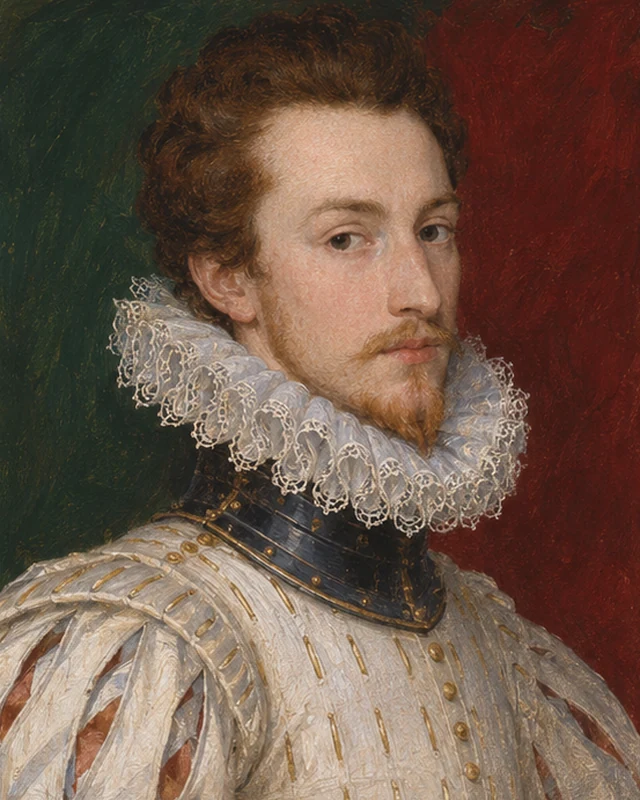
Sir Philip Sidney (1554-1586) was the ideal Elizabethan gentleman: courtier, diplomat, soldier, scholar and poet. He wrote his defence of poetry around 1579 or 1580, almost certainly sparked by Gosson's The School of Abuse, though he never mentions Gosson by name. The essay was not printed during Sidney's short life. It appeared posthumously in 1595 in two separate London editions: Henry Olney printed it as An Apology for Poetry, and William Ponsonby printed it as The Defence of Poesy. Both titles remain in common use today.
Written in graceful, witty prose and structured like a classical courtroom speech (oratio), the essay is the cornerstone of English Renaissance criticism.
The poet as maker and prophet
Sidney begins by defending the antiquity and nobility of poetry. Poetry, he notes, was the first light-giver to ignorance, and the earliest philosophers and historians wrote in verse. He then looks at the names given to the poet. The Romans called the poet vates, meaning a diviner, foreseer or prophet. The Greeks called him poietes, from the verb poiein, meaning "to make"—which matches the old English word "maker".
Other arts—astronomy, medicine, law, history—are bound to nature as it already exists. Only the poet is free to rise above nature. As Sidney puts it in one of the most famous lines in English criticism, nature's "world is brazen, the poets only deliver a golden". The poet does not merely copy fallen reality; he creates a richer, nobler image of what human life can be.
The definition of poetry
Sidney's central definition brings Aristotle and Horace together in a single memorable sentence:
"Poesy therefore is an art of imitation, for so Aristotle termeth it in his word mimesis, that is to say, a representing, counterfeiting, or figuring forth—to speak metaphorically, a speaking picture—with this end, to teach and delight."
Notice how carefully Sidney builds this definition. From Aristotle he takes mimesis (imitation). From the classical tradition of Simonides and Horace he takes the metaphor of "a speaking picture". From Horace he takes the twin purpose: "to teach and delight". Sidney also insists that verse is only an ornament of poetry, not its essence. A work in prose that creates a noble fiction can still be poetry, just as a person may be a poet without writing in verse.
Poetry above philosophy and history
To prove that poetry is the highest form of learning, Sidney compares the poet with two rivals: the moral philosopher and the historian.
The philosopher teaches virtue through abstract rules and definitions, which are hard to understand and even harder to love. The historian offers concrete examples from real life, yet history is tied to "what is" rather than "what should be". In real history, wicked men often prosper while good men suffer.
The "peerless poet", Sidney argues, performs the work of both and surpasses both. He takes the philosopher's moral truth and clothes it in a vivid, unforgettable picture. He gives us a perfect picture of courage in Aeneas or wisdom in Ulysses. In doing so, poetry does not merely inform the mind; it moves the will to virtuous action. As Sidney explains, "our erected wit maketh us know what perfection is, and yet our infected will keepeth us from reaching unto it." Poetry bridges that gap by making virtue delightful.
Answering the four charges
Like a skilled lawyer in court, Sidney lists the four main charges brought against poetry and answers each in turn:
- There are more fruitful subjects to spend time on. Sidney replies that no other learning teaches and moves people to goodness as effectively as poetry does, so no time is better spent.
- Poetry is the mother of lies. Sidney's reply is famous: "Now for the poet, he nothing affirms, and therefore never lieth." A historian or astronomer claims to state facts, and can therefore be caught in a lie. A poet never claims his story happened in fact; he offers a fiction to show a higher truth.
- Poetry is the nurse of abuse. Sidney agrees that bad poems can do harm, but he argues that the fault lies in the misuse, not in the art itself. A sword can be used to murder or to defend one's country; we do not blame the steel. It is man's wit that abuses poetry, not poetry that abuses man.
- Plato banished poets from his Republic. Sidney points out that Plato himself was the most poetical of all philosophers, writing in lively dialogues full of myths and metaphors. Plato banished only the abuse of poetry—false tales about the gods—not poetry itself. In the Ion, Plato even called poetry a divine inspiration.
- Time better spent elsewhere?Poetry can move people to goodness.
- Poets tell lies?Fiction makes no claim to be fact.
- Poetry encourages abuse?The fault lies in misuse of the art.
- Plato banished poets?Sidney argues Plato rejected the abuse of poetry.
English poetry and drama
In the closing part of the essay, Sidney reviews the state of English writing in his own day. He praises Chaucer's Troilus and Criseyde, the Earl of Surrey's lyrics, and Edmund Spenser's The Shepheardes Calender (though he doubts Spenser's use of old, rustic words).
On drama, Sidney is strict and classical. He praises Gorboduc (by Thomas Norton and Thomas Sackville) for its stately speeches and moral weight, yet faults it for breaking the unities of time and place. He mocks contemporary plays that leap across continents and decades in two hours, and he famously condemns "mongrel tragi-comedy" for mingling kings and clowns in the same play. Tragedy, he insists, should remain high and serious, while comedy should imitate the common errors of life to arouse delight rather than crude laughter.
There is a gentle irony here. Sidney wrote before Marlowe and Shakespeare transformed the London stage. The very "mongrel" freedom he disliked soon produced some of the greatest plays in the English language.
An interesting story
Sidney never saw his defence of poetry in print. He was wounded fighting the Spanish at the Battle of Zutphen in the Netherlands and died in October 1586, at the age of thirty-one. For nearly a decade, his essay circulated only in handwritten copies among friends. Then, in 1595, two London publishers—Henry Olney and William Ponsonby—both printed it in the same year, using different manuscripts and giving it two different titles. Olney called it An Apology for Poetry; Ponsonby, who was the Sidney family's authorised publisher, called it The Defence of Poesy. Because both editions survived, readers and exam papers still use both names.
Important points to remember
- Sir Philip Sidney (1554-1586) wrote An Apology for Poetry around 1579-1580.
- It was published posthumously in 1595 under two titles: An Apology for Poetry (Henry Olney) and The Defence of Poesy (William Ponsonby).
- The Romans called the poet vates (prophet), and the Greeks called him poietes (maker).
- Sidney says nature's world is "brazen", while poets deliver a "golden" world.
- Sidney defines poetry as an art of imitation (mimesis), "a speaking picture", whose end is "to teach and delight".
- Poetry is superior to philosophy (which gives abstract precept) and history (which is tied to particular facts).
- Answering the charge of lying, Sidney says: "Now for the poet, he nothing affirms, and therefore never lieth."
- Sidney argues that Plato banished only the abuse of poetry, not poetry itself.
- Sidney praises Gorboduc for its stately style but faults its neglect of the unities of time and place.
- Sidney criticises "mongrel tragi-comedy" for mixing kings and clowns.
Handbooks, rhyme, and the English language
While Sidney defended the dignity of poetry, other Elizabethan critics rolled up their sleeves to examine how English verse actually worked.
William Webbe and George Puttenham
In 1586, William Webbe published A Discourse of English Poetrie. Webbe surveyed English poets from Chaucer to Spenser, praising Spenser's The Shepheardes Calender as equal to the pastorals of Theocritus and Virgil. Like several scholars of his day, Webbe disliked rhyme and tried to show how English verse could be written in classical quantitative metres.
A far richer and more lively book appeared anonymously in 1589: The Arte of English Poesie, generally attributed to George Puttenham (1529-1591). It is the most comprehensive Elizabethan handbook of poetry and rhetoric, structured into three clear books:
- Book I: Of Poets and Poesie — defends poetry as a civilising art and surveys poetic genres and English poets.
- Book II: Of Proportion — examines metre, rhyme, stanza forms and even shaped "pattern poems" such as pillars and eggs.
- Book III: Of Ornament — catalogues rhetorical figures and styles, explaining how language pleases both eye and ear.
Puttenham writes for the courtier rather than the classroom. He gives memorable, playful English nicknames to Greek rhetorical terms—calling hyperbole "the over-reacher", metaphor "the figure of transport", and irony "the dry mock". Above all, Puttenham stresses decorum (which he calls "decency" or "comeliness") and insists that poetry's primary aim is to give pleasure while remaining guided by "right reason".
The quarrel over rhyme: Campion and Daniel
One of the sharpest debates of the English Renaissance concerned rhyme itself. Humanist scholars—including a small literary circle sometimes called the Areopagus—argued that rhyme was a crude, medieval habit. They wanted English poets to imitate Greek and Latin "quantitative" verse, which measures syllables by length (long and short) rather than by stress.
In 1602, the poet, musician and physician Thomas Campion (1567-1620) published Observations in the Art of English Poesie. Campion attacked rhyme as a "vulgar and unartificial custom" and offered examples of unrhymed English verse written on classical models. The irony was obvious even to his readers: Campion was himself one of the finest writers of rhymed lyrics and lute songs in the English language.
The very next year, Samuel Daniel (1562-1619) answered him in A Defence of Ryme (1603). Daniel's essay is calm, sensible and deeply modern in spirit. He argued that every language has its own natural genius, shaped by "custom" and "nature". Greek and Latin used quantitative metre because it suited their tongues; English naturally relies on accent and rhyme. Rhyme is not a chain that cramps the poet, Daniel says, but "a frame of words confined within certain measure" that delights the ear and helps the memory. Daniel won the argument decisively, and the debate over classical quantitative verse faded away.
Francis Bacon and the place of poetry
The philosopher and statesman Francis Bacon (1561-1626) was not primarily a literary critic, yet a few famous pages in The Advancement of Learning (1605) left a lasting mark on English criticism.
Mapping all human knowledge, Bacon divided learning into three great branches, each linked to a faculty of the human mind:
- History belongs to memory.
- Poesy belongs to imagination.
- Philosophy belongs to reason.
Bacon defined poetry as "feigned history". Because the real world is smaller and less just than the human spirit desires, poetry gives the mind "some shadow of satisfaction" by presenting grander actions and clearer poetic justice than history allows. While Bacon still placed reason and scientific truth above imagination, his link between poetry and the imagination pointed forward to later theories of literature.
Important points to remember
- William Webbe published A Discourse of English Poetrie in 1586 and praised Spenser highly.
- George Puttenham's The Arte of English Poesie (1589) was published anonymously and is divided into three books: Of Poets and Poesie, Of Proportion, and Of Ornament.
- Puttenham gave playful English names to Greek rhetorical figures (such as "the over-reacher" for hyperbole) and stressed decorum.
- Thomas Campion attacked rhyme in Observations in the Art of English Poesie (1602), advocating classical quantitative verse.
- Samuel Daniel replied in A Defence of Ryme (1603), defending rhyme through "custom" and "nature" and winning the debate.
- In The Advancement of Learning (1605), Francis Bacon linked history to memory, poesy to imagination, and philosophy to reason.
- Bacon defined poetry as "feigned history".
Ben Jonson: classicism on the English stage
Ben Jonson (1572-1637) was a bricklayer's stepson who became one of the most learned scholars, poets and dramatists of his age. Unlike Sidney, who wrote as a noble amateur, Jonson was a working man of the theatre. He is the first thoroughgoing English classicist, and he forms the bridge between the Renaissance and the Neoclassical age of John Dryden.
Jonson did not write a single systematic treatise like Sidney's Apology. Instead, his critical views are scattered across his play prologues, his dedications, his translation of Horace's Ars Poetica (published in 1640), his recorded conversations with the Scottish poet William Drummond of Hawthornden (1619), his famous 1623 First Folio poem on Shakespeare, and his prose commonplace book Timber, or Discoveries Made upon Men and Matter (published posthumously in the Folio of 1640-1641, with the Latin subtitle Explorata).
Craft, rules, and decorum
Jonson prized discipline, clarity and careful revision. In Timber, or Discoveries, he names five qualities needed to make a good poet: natural wit (ingenium), exercise or practice, imitation, study (reading the best authors), and art. Natural talent alone is never enough; a poet must labour over his lines and bring them "to the anvil" again and again.
Jonson's idea of imitation is practical and lively. To imitate the ancients does not mean copying them slavishly like a servant. It means "to convert the substance, or riches of another poet, to his own use", just as a bee gathers nectar from many flowers to make its own honey. Even though Jonson revered Aristotle and Horace, he refused to worship them blindly. The ancients, he wrote, should be treated as "guides, not commanders". Truth lies open to all, and modern writers may improve upon what the ancients began.
Comedy of humours and the stage
In his prologues—especially the revised prologue to Every Man in His Humour (printed in the 1616 Folio)—Jonson stated his dramatic creed clearly. He mocked popular plays that crammed wars, monsters and decades of history onto a tiny stage. Instead, he promised "deeds, and language, such as men do use", holding up "an image of the times" so that audiences might laugh at human folly and mend their ways.
His famous "comedy of humours" drew on the old medical theory of the four bodily fluids (blood, phlegm, choler and melancholy). When one humour dominated a person's temperament, it produced an absurd obsession or ruling bias. By exposing these humours on stage, Jonson blended realistic observation with Horatian moral correction.
Jonson on Shakespeare
Jonson's remarks on William Shakespeare are among the finest pieces of practical criticism in the Renaissance. In the 1623 First Folio poem, "To the Memory of My Beloved, the Author Mr. William Shakespeare", Jonson praised his rival generously, declaring that Shakespeare was "not of an age, but for all time", even though he had "small Latin, and less Greek".
In Timber, or Discoveries (under the heading De Shakespeare Nostrati), Jonson offered a sharper, more balanced judgment. The actors had often boasted that Shakespeare never blotted out a single line he wrote. Jonson recorded his frank reply:
"My answer hath been, 'Would he had blotted a thousand,' which they thought a malevolent speech."
Yet Jonson immediately clarified his affection: "for I loved the man, and do honour his memory on this side idolatry as much as any." Shakespeare, he said, had an open nature, brave notions and a natural facility that sometimes needed a check—he flowed too freely and needed to be stopped (sufflaminandus erat). Still, Jonson concluded, Shakespeare "redeemed his vices with his virtues. There was ever more in him to be praised than to be pardoned." That blend of admiration and honest fault-finding set the tone for English Shakespeare criticism for the next two centuries.
Key terms
- Renaissance criticism - literary criticism of the sixteenth and early seventeenth centuries, shaped by classical humanism and the defence of vernacular poetry.
- Humanism - the Renaissance revival of Greek and Latin learning and its focus on human dignity, education and civic virtue.
- Puritan attack - the moral assault on poetry and public theatres in Elizabethan England, led by Stephen Gosson.
- Vates - the Roman name for the poet as prophet, diviner or seer, cited by Sidney.
- Poietes / Maker - from the Greek poiein ("to make"), the idea of the poet as a creator rather than a mere copier.
- Golden world - Sidney's phrase for the ideal world created by poets, contrasted with nature's "brazen" world.
- Speaking picture - Sidney's metaphor for poetry as a vivid imitation whose end is to teach and delight.
- Mongrel tragi-comedy - Sidney's scornful term for Elizabethan plays that mixed tragic kings with comic clowns.
- Three unities - the dramatic rule of one action, one day and one place, formulated by Castelvetro (1570) and endorsed by Sidney.
- Inkhorn terms - affected, overly learned words borrowed from Latin or Greek, disliked by critics such as Gascoigne.
- Decorum - the fitting of style, tone and character to subject and occasion, called "decency" by Puttenham.
- Quantitative verse - classical metre based on long and short syllables rather than English stress and rhyme.
- Areopagus - the informal Elizabethan literary circle (linked with Sidney, Spenser and Gabriel Harvey) that experimented with quantitative verse.
- Custom and nature - Samuel Daniel's two grounds for defending English rhyme against classical rules.
- Feigned history - Francis Bacon's definition of poetry as imaginative narrative that satisfies the desires of the mind.
- Comedy of humours - Ben Jonson's realistic comedy based on characters ruled by a single dominant temperament or obsession.
- Guides, not commanders - Ben Jonson's rule for how modern writers should treat the ancient classics.
- Timber, or Discoveries - Ben Jonson's posthumous prose notebook (1640-1641), containing his critical maxims and his famous estimate of Shakespeare.
Important points to remember
- Ben Jonson (1572-1637) was the first thoroughgoing English classicist and a bridge to the Neoclassical age.
- His main critical prose work is Timber, or Discoveries Made upon Men and Matter (published 1640-1641, Latin subtitle Explorata).
- Jonson translated Horace's Ars Poetica (published 1640) and valued craft, revision and study alongside natural wit.
- Jonson said the ancients should be "guides, not commanders".
- Jonson defined creative imitation as converting "the substance, or riches of another poet, to his own use".
- In Every Man in His Humour, Jonson championed realistic comedy of humours as "an image of the times".
- In his 1623 First Folio poem, Jonson called Shakespeare "not of an age, but for all time".
- In Timber, Jonson wished Shakespeare "had blotted a thousand" lines, yet honoured his memory "on this side idolatry" and concluded there was "ever more in him to be praised than to be pardoned".
How Renaissance criticism shaped what came after
Ideas that stayed
Renaissance critics did not merely pass classical ideas along; they naturalized them in English. Sidney gave English criticism its foundational defence of fiction—the idea that the poet "nothing affirms, and therefore never lieth", and that literature teaches by delighting. Puttenham showed that English rhetoric and verse could be studied with care and wit. Daniel proved that English poetry must follow the natural grain of the English language rather than bow to foreign metres. Bacon tied poetry firmly to the imagination. Jonson showed that admiration for a great writer like Shakespeare could live alongside honest, reasoned judgment.
From Renaissance to Neoclassicism
By the time Jonson died in 1637, the centre of English criticism was shifting. Elizabethan critics like Sidney and Puttenham had fought to justify poetry's right to exist and to build a vocabulary for English verse. The next age—the age of John Dryden, Alexander Pope and Samuel Johnson—took poetry's dignity for granted and focused instead on refining taste, debating the dramatic unities, and measuring English writers against French and classical standards. Jonson's cool, disciplined classicism pointed straight toward Dryden, while Sidney's vision of the poet as creator echoed centuries later in Percy Bysshe Shelley's A Defence of Poetry (1821).
How to read the Renaissance critics
When you read the Renaissance critics, ask three simple questions of each writer. What threat or problem is he answering? How does he use the Greek and Roman classics—as strict laws or as flexible guides? And what does he think English literature can become? Gosson was answering the rise of commercial playhouses. Sidney was answering Puritan moralism. Daniel was answering classical pedantry. Jonson was answering sloppy stagecraft. Seen through these questions, Renaissance criticism comes alive as a vigorous conversation rather than a list of dusty rules.
Important points to remember
- Renaissance critics naturalized Greek and Roman critical ideas in English.
- Sidney established the classic English defence of fiction as teaching through delight.
- Daniel settled the debate over rhyme by appealing to the natural genius of the English language.
- Bacon linked poetry to the imagination, a connection that later grew central in Romanticism.
- Jonson's balanced classicism led directly into the Neoclassical age of Dryden and Johnson.
- Sidney's vision of the poet as creator later echoed in Shelley's A Defence of Poetry.
Critics and works
| Critic | Dates | Key work | Known for |
|---|---|---|---|
| Roger Ascham | 1515-1568 | The Scholemaster (1570) | Humanist education; classical restraint; dislike of rhyme |
| George Gascoigne | c. 1535-1577 | Certayne Notes of Instruction (1575) | First English treatise on versification |
| Stephen Gosson | 1554-1624 | The School of Abuse (1579) | Puritan attack on poetry, music and plays; dedicated to Sidney |
| Thomas Lodge | c. 1558-1625 | A Defence of Poetry, Music, and Stage Plays (1579/1580) | Early reply defending poetry and drama against Gosson |
| Sir Philip Sidney | 1554-1586 | An Apology for Poetry / The Defence of Poesy (1595) | Poet as maker; "speaking picture"; poetry above philosophy and history |
| William Webbe | fl. 1568-1591 | A Discourse of English Poetrie (1586) | Praise of Spenser; support for classical quantitative metre |
| George Puttenham | 1529-1591 | The Arte of English Poesie (1589) | Three-book handbook of poetry, proportion and ornament; English names for figures |
| Thomas Campion | 1567-1620 | Observations in the Art of English Poesie (1602) | Attack on rhyme in favour of classical quantitative verse |
| Samuel Daniel | 1562-1619 | A Defence of Ryme (1603) | Decisive defence of English rhyme based on custom and nature |
| Francis Bacon | 1561-1626 | The Advancement of Learning (1605) | Mapping poetry to imagination; poetry as "feigned history" |
| Ben Jonson | 1572-1637 | Timber, or Discoveries (1640-1641) | Practical classicism; comedy of humours; balanced critique of Shakespeare |
Quick revision - 50 points
Open the 50 pointsClose the list
- Renaissance criticism began in Italy before reaching France and England.
- Giorgio Valla published a Latin translation of Aristotle's Poetics in 1498.
- The Aldine Press printed the Greek text of the Poetics in 1508.
- Antonio Minturno published De Poeta in 1559.
- Julius Caesar Scaliger's Poetices libri septem was published posthumously in 1561.
- Lodovico Castelvetro set out the three unities in his 1570 commentary on Aristotle's Poetics.
- Joachim du Bellay defended the French vernacular in 1549.
- English Renaissance criticism answered two main challenges: Puritan moral attacks and doubts about the English language.
- In Abrams's map, Renaissance criticism combines the mimetic view and the pragmatic view.
- Roger Ascham's The Scholemaster was published posthumously in 1570.
- Ascham was tutor to Queen Elizabeth I and warned against Italian romances.
- George Gascoigne's Certayne Notes of Instruction (1575) is the first English treatise on versification.
- Stephen Gosson published The School of Abuse in 1579.
- Gosson dedicated The School of Abuse to Sir Philip Sidney without permission.
- Thomas Lodge answered Gosson with A Defence of Poetry, Music, and Stage Plays (1579 or 1580).
- Gosson replied to Lodge in Playes Confuted in Five Actions (1582).
- Sir Philip Sidney lived from 1554 to 1586 and died after the Battle of Zutphen.
- Sidney wrote An Apology for Poetry around 1579-1580.
- Sidney's essay was published posthumously in 1595 in two editions.
- Henry Olney published Sidney's essay as An Apology for Poetry (1595).
- William Ponsonby published Sidney's essay as The Defence of Poesy (1595).
- Sidney notes that the Romans called the poet vates (prophet) and the Greeks called him poietes (maker).
- Sidney wrote that nature's world is "brazen, the poets only deliver a golden".
- Sidney defined poetry as an art of imitation (mimesis), "a speaking picture", whose end is "to teach and delight".
- Sidney argued that verse is only an ornament of poetry, not its essence.
- Sidney ranked poetry above both philosophy and history.
- Philosophy gives abstract precept, and history is bound to particular facts; the poet unites precept with vivid example.
- Answering the charge of lying, Sidney wrote: "Now for the poet, he nothing affirms, and therefore never lieth."
- Sidney argued that Plato banished only the abuse of poetry, not poetry itself.
- Sidney praised Gorboduc for its stately style but criticised its neglect of the unities of time and place.
- Sidney condemned "mongrel tragi-comedy" for mixing kings and clowns.
- William Webbe published A Discourse of English Poetrie in 1586.
- George Puttenham's The Arte of English Poesie was published anonymously in 1589.
- Puttenham's Arte is divided into three books: Of Poets and Poesie, Of Proportion, and Of Ornament.
- Puttenham gave English names to Greek rhetorical figures, such as "the over-reacher" for hyperbole and "the dry mock" for irony.
- Thomas Campion attacked rhyme in Observations in the Art of English Poesie (1602).
- Campion argued for classical quantitative verse based on long and short syllables.
- Samuel Daniel answered Campion with A Defence of Ryme (1603).
- Daniel defended rhyme on the grounds of "custom" and "nature" and called verse "a frame of words confined within certain measure".
- Francis Bacon published The Advancement of Learning in 1605.
- Bacon linked history to memory, poesy to imagination, and philosophy to reason.
- Bacon defined poetry as "feigned history".
- Ben Jonson lived from 1572 to 1637 and was the first thoroughgoing English classicist.
- Jonson's Timber, or Discoveries Made upon Men and Matter was published posthumously in 1640-1641.
- Jonson's translation of Horace's Ars Poetica was published in 1640.
- Jonson said the ancient writers should be treated as "guides, not commanders".
- Jonson championed realistic "comedy of humours" in the prologue to Every Man in His Humour.
- In his 1623 First Folio poem, Jonson called Shakespeare "not of an age, but for all time".
- In Timber, Jonson replied to the actors' boast about Shakespeare: "Would he had blotted a thousand."
- Jonson still declared of Shakespeare: "I loved the man, and do honour his memory on this side idolatry as much as any."
Quick quiz - 25 questions
Tap an answer to see at once if it is right. You do not need to log in.
Open the 25 questionsClose the quiz
1Which Italian critic set out the three unities in his 1570 commentary on Aristotle's Poetics?
Answer: B. Lodovico Castelvetro formulated the three unities of action, time and place in his 1570 commentary.
2Which work is the first treatise in English devoted entirely to the craft of versification?
Answer: C. George Gascoigne published Certayne Notes of Instruction in 1575 as a practical guide to English verse.
3Who wrote The School of Abuse (1579), the Puritan attack on poetry and the stage?
Answer: A. Stephen Gosson, a former playwright, attacked poets, music and players in The School of Abuse (1579).
4To whom did Stephen Gosson dedicate The School of Abuse without permission?
Answer: D. Gosson awkwardly dedicated his anti-poetry pamphlet to Sir Philip Sidney, a poet and patron of poets.
5Who published the earliest printed reply to Gosson, A Defence of Poetry, Music, and Stage Plays?
Answer: B. Thomas Lodge answered Gosson in 1579 or 1580, though his pamphlet was quickly suppressed.
6In what year was Sir Philip Sidney's An Apology for Poetry first published?
Answer: C. Although written around 1579-1580, Sidney's essay was published posthumously in 1595.
7Which two publishers brought out Sidney's essay in 1595 under two different titles?
Answer: A. Henry Olney published it as An Apology for Poetry and William Ponsonby as The Defence of Poesy.
8What did the Roman word vates, cited by Sidney, mean?
Answer: B. Sidney notes that the Romans called the poet vates, meaning a diviner, foreseer or prophet.
9How does Sidney contrast nature's world with the poet's world?
Answer: C. Sidney writes that nature's "world is brazen, the poets only deliver a golden".
10In Sidney's famous definition, poetry is "a speaking picture" with what end?
Answer: B. Blending Aristotle and Horace, Sidney defines poetry as an art of imitation with the end "to teach and delight".
11Why does Sidney rank poetry above history?
Answer: B. Sidney argues that history is tied to "what is", whereas the poet can show the ideal pattern of "what should be".
12How does Sidney answer the charge that the poet is a liar?
Answer: C. Because a poet offers fiction rather than claiming factual truth, "he nothing affirms, and therefore never lieth".
13Which early English tragedy does Sidney praise for its stately speeches, while faulting its neglect of the unities?
Answer: C. Sidney praises Gorboduc for its noble style and moral weight, but faults it for breaking the unities of time and place.
14What scornful phrase does Sidney use for plays that mingle kings and clowns?
Answer: B. Sidney criticises "mongrel tragi-comedy" for mixing serious royal action with low comic scenes.
15How many books make up George Puttenham's The Arte of English Poesie (1589)?
Answer: B. Puttenham's treatise is divided into three books: Of Poets and Poesie, Of Proportion, and Of Ornament.
16Which of these is NOT one of the three books of Puttenham's The Arte of English Poesie?
Answer: D. The three books are Of Poets and Poesie, Of Proportion, and Of Ornament.
17What playful English name did Puttenham give to hyperbole?
Answer: B. Puttenham called hyperbole "the over-reacher", irony "the dry mock", and metaphor "the figure of transport".
18Who attacked rhyme in Observations in the Art of English Poesie (1602)?
Answer: B. Thomas Campion attacked rhyme as "vulgar and unartificial" and argued for classical quantitative verse.
19Who answered Campion with A Defence of Ryme (1603)?
Answer: A. Samuel Daniel defended English rhyme on the grounds of custom and nature in A Defence of Ryme (1603).
20In Francis Bacon's The Advancement of Learning (1605), which faculty of the mind is linked to poesy?
Answer: C. Bacon links history to memory, poesy to imagination, and philosophy to reason.
21What short phrase does Francis Bacon use to define poetry?
Answer: B. Bacon defines poesy as "feigned history" that satisfies the desires of the mind.
22What is the title of Ben Jonson's posthumous prose commonplace book containing his critical notes?
Answer: C. Timber, or Discoveries Made upon Men and Matter was published posthumously in the 1640-1641 Folio.
23How did Ben Jonson advise modern writers to treat the ancient classics?
Answer: C. Jonson admired the ancients deeply yet insisted they should be treated as "guides, not commanders".
24When the actors boasted that Shakespeare never blotted a line, what was Ben Jonson's reply in Timber?
Answer: B. Jonson replied "Would he had blotted a thousand", wishing Shakespeare had revised more carefully, while still honouring him deeply.
25In which work did Ben Jonson call Shakespeare "not of an age, but for all time"?
Answer: C. That famous line appears in Jonson's 1623 First Folio poem, "To the Memory of My Beloved, the Author Mr. William Shakespeare".
Frequently asked questions
What is Renaissance literary criticism?
It is the literary criticism written in Europe during the sixteenth and early seventeenth centuries, inspired by the rediscovery of Greek and Roman texts. In England, its main figures include Sir Philip Sidney, George Puttenham, Samuel Daniel, Francis Bacon and Ben Jonson.
Why did Sir Philip Sidney write An Apology for Poetry?
Sidney wrote it around 1579-1580 to answer growing Puritan attacks on poetry and the theatre, especially Stephen Gosson's The School of Abuse (1579), which Gosson had awkwardly dedicated to Sidney himself.
Why does Sidney's essay have two titles?
Sidney died in 1586 before the essay was printed. In 1595, two London publishers printed it from different manuscripts: Henry Olney titled it An Apology for Poetry, and William Ponsonby titled it The Defence of Poesy.
What was the rhyme debate between Thomas Campion and Samuel Daniel?
In 1602, Campion attacked rhyme and urged English poets to adopt classical quantitative verse. In 1603, Daniel replied with A Defence of Ryme, arguing that every language has its own natural music and that rhyme suits English through custom and nature.
How did Francis Bacon classify poetry?
In The Advancement of Learning (1605), Bacon divided human learning into three branches matching three faculties of the mind: history to memory, poesy to imagination, and philosophy to reason. He defined poetry as "feigned history".
What did Ben Jonson think of Shakespeare?
Jonson admired Shakespeare deeply while wishing he had revised more carefully. In Timber, or Discoveries, he wrote "Would he had blotted a thousand", yet added that he loved the man, honoured his memory "on this side idolatry", and saw far more in him to praise than to pardon.
Sources
- Abrams, M. H., and Geoffrey Galt Harpham. A Glossary of Literary Terms. 11th ed., Cengage Learning, 2015.
- Abrams, M. H. The Mirror and the Lamp: Romantic Theory and the Critical Tradition. Oxford University Press, 1953.
- Drabble, Margaret, editor. The Oxford Companion to English Literature. 6th ed., Oxford University Press, 2000.
- Ascham, Roger. The Scholemaster. 1570.
- Gascoigne, George. Certayne Notes of Instruction concerning the Making of Verse or Ryme in English. 1575.
- Gosson, Stephen. The School of Abuse. 1579.
- Sidney, Sir Philip. An Apology for Poetry (The Defence of Poesy). 1595.
- Puttenham, George. The Arte of English Poesie. 1589.
- Campion, Thomas. Observations in the Art of English Poesie. 1602.
- Daniel, Samuel. A Defence of Ryme. 1603.
- Bacon, Francis. The Advancement of Learning. 1605.
- Jonson, Ben. Timber, or Discoveries Made upon Men and Matter. 1640-1641.
Afsar Khan, Ph.D. English
Test your knowledge
Check what you have learned with quizzes and MCQs.