
Indian Poetics · Part 5 of 7
Medieval Indian thought
Bhakti, Persian and Hindi thinking about poetry, from Jnanesvara to Keshavadasa, and Al-Badaoni on writing history.
Chapters in this part
5 chapters, in order. Each chapter is one article. It opens with the thinkers of that school, and every name leads to a page of its own.
-
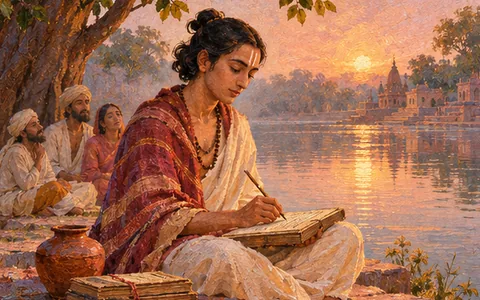 Jnanesvara and Indian Poetics
Jnanesvara
- Life and time of Jnanesvara
- Major works: Jnanesvari, Amritanubhava, Changadeva-Pasashthi, Haripatha and the abhangas
- His philosophy: the world as the expression of divine love and joy
- Bhakti, and how his view differs from other thinkers'
- Jnanesvara's contribution
-
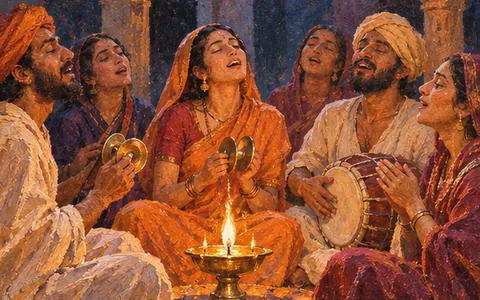 Bhakti Rasa
Rupa Goswami
- The bhakti movement and Indian literature
- Six characteristics of bhakti poetry (after Andrew Schelling)
- Rupa Goswami and bhakti rasa
-
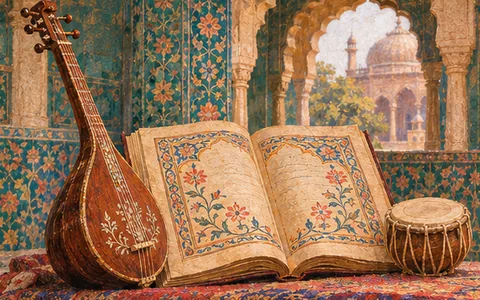 Amir Khusrau and Indian Poetics
Amir Khusrau
- Poetry and music in Persian and Hindi
- The Nuh Siphir and its significance
- His other works: poems, masnavis and historical writings
-
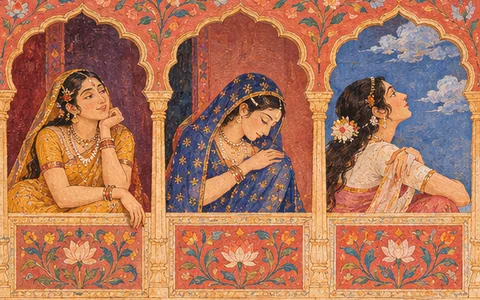 Keshavadasa and the Rasikpriya
Keshavadasa
- The periods of Hindi literature: Adikaal, Bhaktikaal, Ritikaal and Adhunik kaal
- Keshavadasa and his major works
- The Rasikpriya and the states of the heroine
- The Kavipriya
-
 Al-Badaoni and Literary Historiography
Al-Badaoni
- Al-Badaoni and his work
- Badaoni's idea of history
- Tarikh and Al-Badaoni