
Indian Poetics · Part 2 of 7
Alankara, guna and riti
The early schools that looked for what makes poetry beautiful in figures of speech, in qualities of style and in the manner of writing.
Chapters in this part
4 chapters, in order. Each chapter is one article. It opens with the thinkers of that school, and every name leads to a page of its own.
-
 Bhamaha and the Kavyalankara
Bhamaha · Udbhata
- The structure of the Kavyalankara
- Rasa in Bhamaha
- Guna and riti in Bhamaha
- Dosa (defects) in Bhamaha
- Udbhata's commentary on Bhamaha
- Criticism of Bhamaha's theory
-
 Dandin and the Kavyadarsha
Dandin
- The purposes and sources of poetry
- The definition and kinds of kavya, including the mahakavya
- Marga (Vaidarbha and Gauda) and the ten gunas
- Alankara, including figures of sound and riddles
- Dosa (defects)
-
 Vamana and the Riti School
Vamana
- Vamana's contribution
- Riti as the soul of poetry
- Vaidarbhi, Gaudi and Panchali
- The ten gunas
- Why the riti school did not last
-
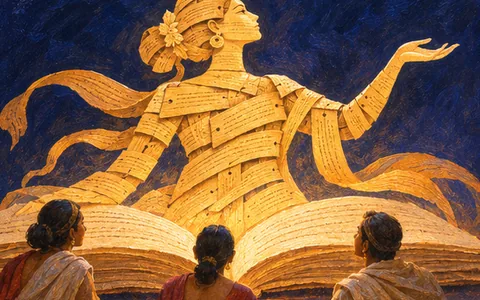 Rajashekhara and the Kavyamimamsa
Rajashekhara
- A short life of Rajashekhara
- The Kavyamimamsa
- The Kavyapurusha (the Poet-Person) and the critics