

On this page
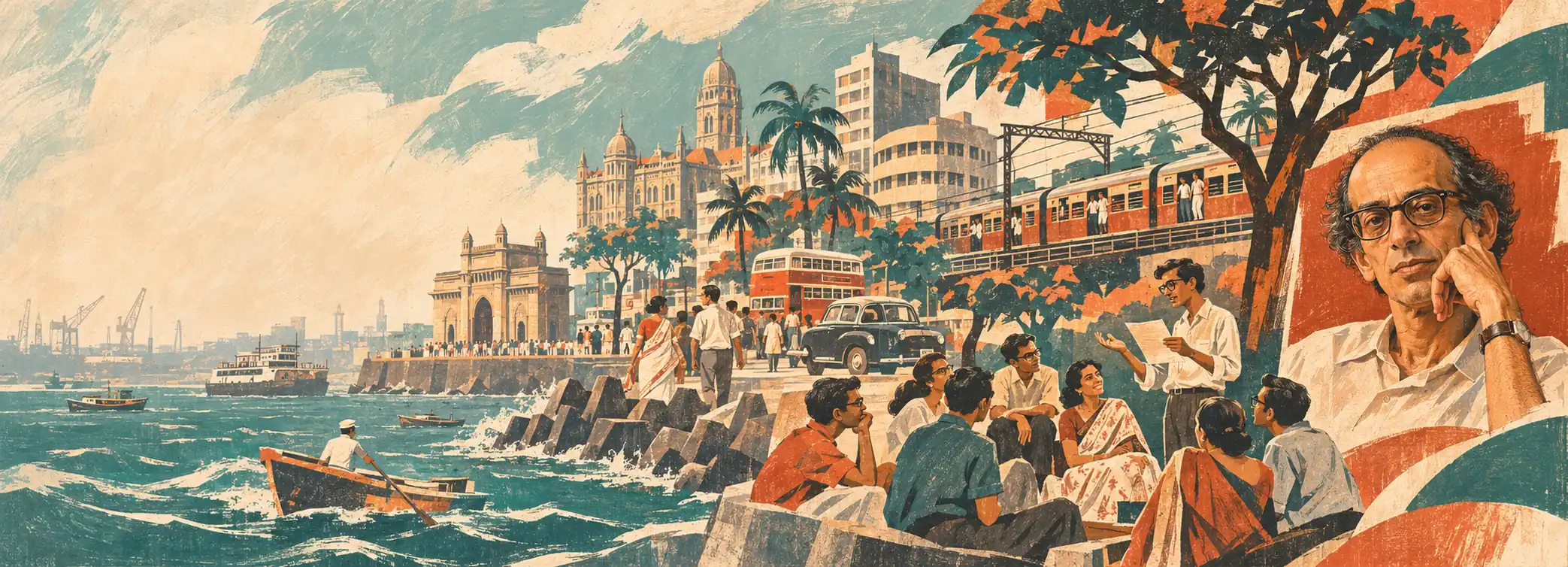
In 1952, Nissim Ezekiel published A Time to Change, a collection of poems that helped announce a new voice in Indian English poetry. Its subjects were not distant legends or idealised landscapes. They included the troubled mind, ordinary relationships and the difficulties of modern life. At nearly the same time, novelists were finding new ways to describe villages, cities, families and the memories of Partition.
This article covers Indian English literature from 1947 to 1980. The period begins with independence and Partition and ends at a useful turning point before the rapid expansion of later Indian English fiction. The dates are teaching boundaries, not a claim that writers stopped working in 1980. The strongest emphasis falls on developments after 1957, particularly modern poetry, experimental novels and drama. Works published after 1980 are clearly identified as later works by writers discussed here.
We will first study the political, social, economic and religious world of independent India. Then we will examine novels, poetry, theatre, literary language and criticism. Difficult words will be explained when they first appear, and the last sections will help readers revise the important people, works and ideas.
The world of this period
Political life
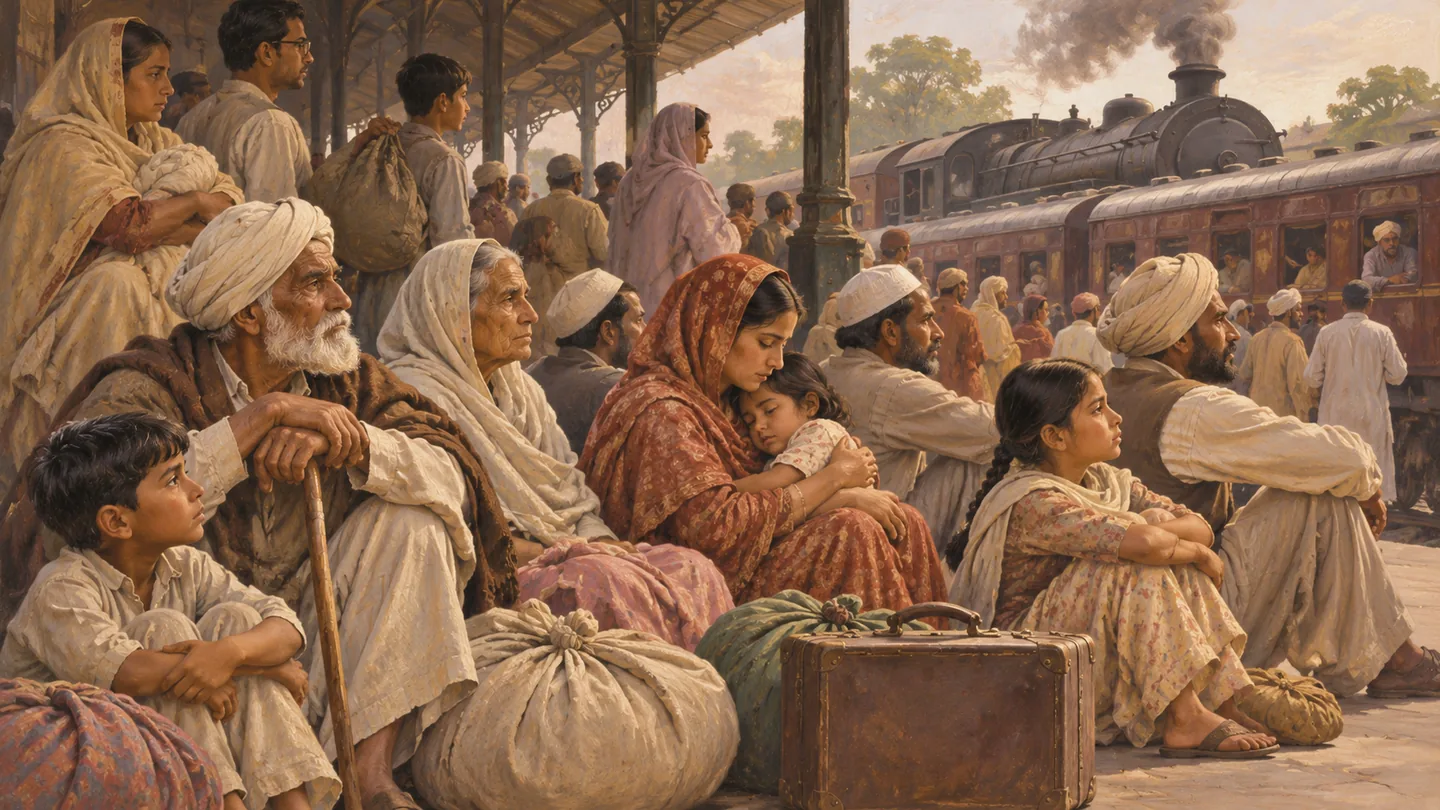
India became independent in August 1947, but freedom came with Partition, the division of British India into India and Pakistan. Millions of people crossed new borders. Families lost homes, and violence affected several communities. Writers faced the difficult question of how a free country should remember a painful beginning.
The Constitution of India came into effect on 26 January 1950. It established a democratic republic with guarantees of rights and a commitment to equality. Elections in 1951-52 gave adults the opportunity to choose representatives. These events introduced new ideas of citizenship into public life, even though inherited inequalities did not immediately disappear.
Prime Minister Jawaharlal Nehru encouraged parliamentary institutions, scientific development and planning. In 1956, the States Reorganisation Act changed many state boundaries, largely in response to linguistic demands. Language was not simply a literary matter. It was connected with public identity, education and political representation.
From the late 1950s, elections and public debate continued alongside conflicts over poverty, land and social justice. The wars of 1962 and 1965 added anxiety to public life. The 1971 war was followed by the creation of Bangladesh. Fiction about political power and ordinary families developed against this background.
The Emergency of 1975-1977 marked a serious challenge to democratic rights. The central government restricted civil liberties, and censorship affected public expression. After the Emergency, the 1977 election brought a change in government. The experience encouraged fresh questions about authority, fear and the responsibility of citizens.
Nayantara Sahgal's political fiction helps readers understand these concerns. Her novels examine personal choices within families closely connected to political life. She shows how power changes relationships and moral decisions. Later fiction continued to return to the Emergency, sometimes after the period covered here.
Social life
Independence did not produce an equal society overnight. Caste discrimination, differences in income and unequal educational opportunities remained powerful. The Constitution rejected untouchability, but law and lived experience did not always agree. Literature increasingly examined the distance between national ideals and daily realities.
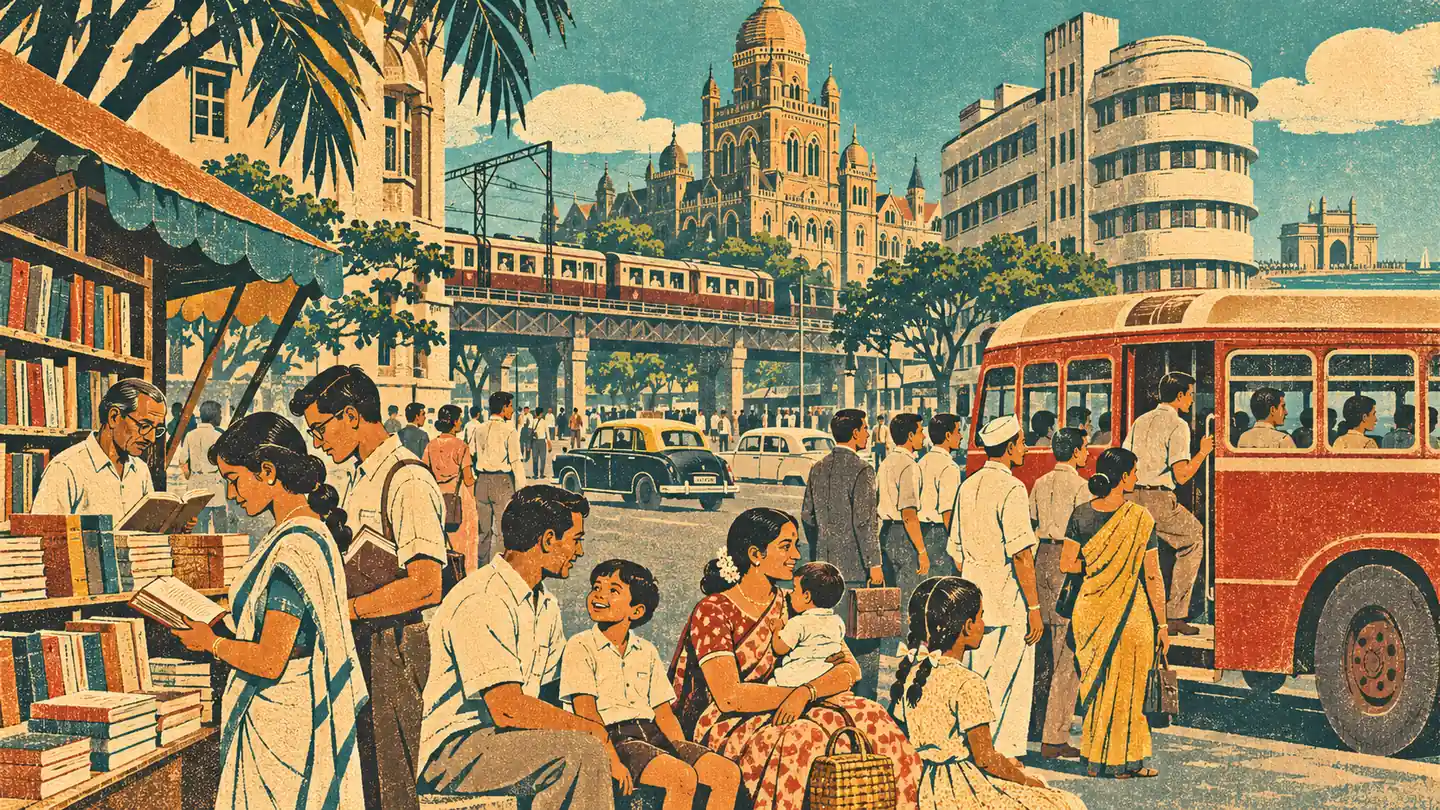
The growth of cities drew people away from villages. Bombay, Delhi, Calcutta and Madras became important spaces for education, work, theatre and publishing. Urban life brought new freedoms but also loneliness and pressure. This urban poetry describes crowded streets, offices, hospitals and the difficulty of finding a place in the city.
Women's education and employment created new opportunities, although expectations within marriage and the family remained restrictive. Women writers did not speak with one voice. Some examined politics, others explored the private mind, and some questioned the rules governing female desire and self-expression. These subjects became central to the work of Kamala Markandaya, Nayantara Sahgal, Anita Desai and Kamala Das.
The effects of Partition continued long after the borders were drawn. The experience could survive as memory, mistrust or silence within a household. Khushwant Singh's Train to Pakistan (1956) is an especially important example. Its village setting allows the reader to see how communal division enters ordinary relationships.
A writer might speak Gujarati, Bengali, Tamil or Marathi at home while publishing poetry or fiction in English. An Indian English writer could belong to several linguistic worlds. This tension influenced both style and subject.
Economic life
Independent India adopted development plans intended to expand industry, agriculture and public services. Major dams, factories and research institutions became symbols of progress. Yet development brought uneven results. Rural poverty continued, and people experienced changes in land use, work and family life differently.
Kamala Markandaya's Nectar in a Sieve (1954) makes these tensions clear. Its narrator, Rukmani, lives in a farming household facing insecurity and industrial change. The novel follows particular people rather than explaining economics through statistics. It reveals how large changes can unsettle a family's sense of safety.
Land reform and new agricultural methods affected rural communities. From the later 1960s, the Green Revolution increased crop production in some regions through irrigation, fertilisers and high-yield seeds. Its benefits were not evenly shared. The contrast between national progress and unequal local experience became an important theme in literature and public debate.
Growing cities produced another form of change. A salaried middle class expanded alongside informal workers and people living with economic uncertainty. In fiction and poetry, ordinary streets or offices often reveal how a person's private life is shaped by the economy.
Some poets challenged the idea that art should speak only about grand public events. Such social realism coexisted with modernism, an approach that explores uncertainty and modern experience through experiments in form.
Schools, colleges and the press
Universities, colleges, journals and small publishers played a growing role in literary culture. More students encountered both British and Indian writing in English. Teachers and editors helped readers discover poetry that did not resemble the older romantic or patriotic models. Libraries and magazines made debate about style and identity possible.
P. Lal founded Writers Workshop in Calcutta in 1958. It published poetry and other writing that larger commercial houses might not support. Such small presses mattered because a poet could find readers without waiting for approval from a major publishing company. They helped create communities of writers who read and criticised one another's work.
In Bombay, Nissim Ezekiel became an important editor, teacher and mentor. The poets around him did not form a single school, but they shared an interest in contemporary speech and carefully made verse. A later publishing cooperative called Clearing House appeared in 1976. It was associated with poets including Gieve Patel, Arvind Krishna Mehrotra, Arun Kolatkar and Adil Jussawalla.
The expansion of publishing also changed translation. Plays originally written in Kannada, Marathi or Bengali reached English readers in translated editions. The difference between an original English work and an English translation is therefore essential to the history of this period.
Religion
Religious practices remained important in family and public life. Independent India adopted a constitutional framework that protected religious freedom, but tensions between communities did not disappear. The memory of Partition shaped discussions of belonging and trust. Literature often approached these questions through people rather than slogans.
Khushwant Singh's Train to Pakistan presents a village where different communities had lived together. Political upheaval changes their relationships. Its force comes from showing the moral choices people make in a time of fear.
Literature also questioned the use of religious custom to control women or justify social inequality. A belief might offer comfort to one person and place limits on another. For some writers, religious ideas were connected with questions about individual freedom, family duty and the possibility of change.
India's many traditions also enriched theatre and poetry. Girish Karnad drew on myth, history and folktale, while A. K. Ramanujan worked across poetry, folklore and translation. These writers did not reproduce traditions without thought. They used familiar forms to examine new questions about identity, responsibility and the modern world.
Did you know?
The Sahitya Akademi, India's national academy of letters, was founded in 1954 and recognised writing in many Indian languages. Its English-language awards include R. K. Narayan's The Guide in 1960, Anita Desai's Fire on the Mountain in 1978, and Jayanta Mahapatra's Relationship in 1981. These dates show why a writer's career should not be forced into one neat historical boundary.
Important points to remember
- India became independent in August 1947 amid Partition.
- The Constitution came into effect on 26 January 1950.
- India's first general elections took place in 1951-52.
- The States Reorganisation Act of 1956 changed many state boundaries.
- The Emergency lasted from 1975 to 1977.
- Writers Workshop began in Calcutta in 1958.
- Clearing House began as a poetry publishing cooperative in 1976.
- The Green Revolution produced uneven changes in rural life.
Literature in this period
A new literary language
The writers of this period asked what it meant to use English in a newly independent country. Some preferred a restrained, direct style. Others reshaped grammar and rhythm to suggest spoken Indian English. Still others worked mainly in Indian languages and reached English readers through translation. These differences matter more than the idea of one fixed national style.
The term Indian English literature usually refers to literature written originally in English by Indian authors. Yet any survey of literary life in India must also notice the wider movement of writing through translation. A Kannada play translated into English does not become an original English play. Its first language remains part of its literary history.
Several important forms grew together. The novel examined Partition, village change and domestic life. Poetry developed a sharper urban voice and new ways to speak about the self. Theatre questioned power and social convention. Literary criticism began to reconsider the relation between English and Indian cultural traditions.
The novel after independence
G. V. Desani (1909-2000) published All About H. Hatterr in 1948. The novel's playful language is itself a form of experiment. It makes the reader notice how flexible and strange English can become.
Desani's approach differs sharply from a realistic village narrative. His linguistic experiment brings different speech styles together for comic and critical effect. This helps explain why Indian English fiction cannot be described through one method. The genre could question the language of authority as well as describe society.
Khushwant Singh (1915-2014) wrote Train to Pakistan (1956), a novel of Partition centred on the village of Mano Majra. Before the arrival of violence, the people of the village have everyday relationships across religious lines. The novel shows how fear and political pressure can interrupt those relationships. It also asks whether acts of courage are possible when an entire community is threatened.
The use of a small village is important. The novel remains important as historical fiction about communal violence. It offers neither an easy picture of harmony nor a simple division into heroes and villains.
Kamala Markandaya (1924-2004) published Nectar in a Sieve in 1954. Rukmani tells the story of her family's struggle with farming, poverty and social change. Her voice gives the novel a personal centre. The rise of a tannery near the village is associated with economic and social disruption, though the novel also shows the family's resilience. Markandaya's work connects domestic life to larger forces of development.
Markandaya's Some Inner Fury (1955) turns to tensions within a relationship during the independence movement. Read together, these novels show that women writers were already exploring both public history and family experience in the early years after independence.
Nayantara Sahgal (born 1927) began her career as a novelist with A Time to Be Happy (1958). Her fiction often places individuals inside political families and institutions. This Time of Morning (1965), Storm in Chandigarh (1969) and A Situation in New Delhi (1977) examine public responsibility and private judgement. Their characters confront questions that cannot be solved by political loyalty alone.
Sahgal's later novel Rich Like Us appeared in 1985, outside the main period of this article. It is included here because it belongs to her larger career and examines the Emergency and its consequences. Students should not mistake a later publication for a novel written in the 1970s.
Anita Desai (born 1937) made the inner life of her characters central to fiction. Cry, the Peacock (1963) focuses on Maya and her troubled marriage. It is commonly discussed as a psychological novel, a narrative that gives special attention to thought, feeling and mental conflict. Desai does not simply describe what a character does. She examines how fear and desire alter what the character sees.
In Voices in the City (1965), the city becomes a difficult space for young people seeking meaning. Fire on the Mountain (1977) considers solitude, memory and relationships. Her Clear Light of Day (1980) examines a Delhi family and the enduring force of childhood and history. The novel uses the movement of memory to reveal tensions between past and present.
Desai's In Custody (1984) is a later novel. It follows Deven, a Hindi teacher who hopes to interview an Urdu poet. The work raises questions about language, cultural loss and frustrated ambition. Its date must remain 1984, even when discussed beside Desai's earlier achievements.
Nirad C. Chaudhuri (1897-1999) contributed a different kind of prose. The Autobiography of an Unknown Indian (1951) uses his personal life to explore wider questions about education, culture and colonial history. Readers should distinguish his personal judgements from established historical facts.
Chaudhuri's The Continent of Circe (1965) developed further reflections on Indian society and history. His writing reminds us that literary prose includes memoir, cultural argument and criticism, not only fiction. This expansion of the prose tradition is a central development after independence.
Poetry: the new urban voice
Modern Indian English poetry gained new importance during the 1950s. Earlier poets had often worked with song-like rhythms or idealised images of India. The newer generation turned towards ordinary speech, irony, uncertainty and the modern city. It was not a rejection of every earlier tradition.
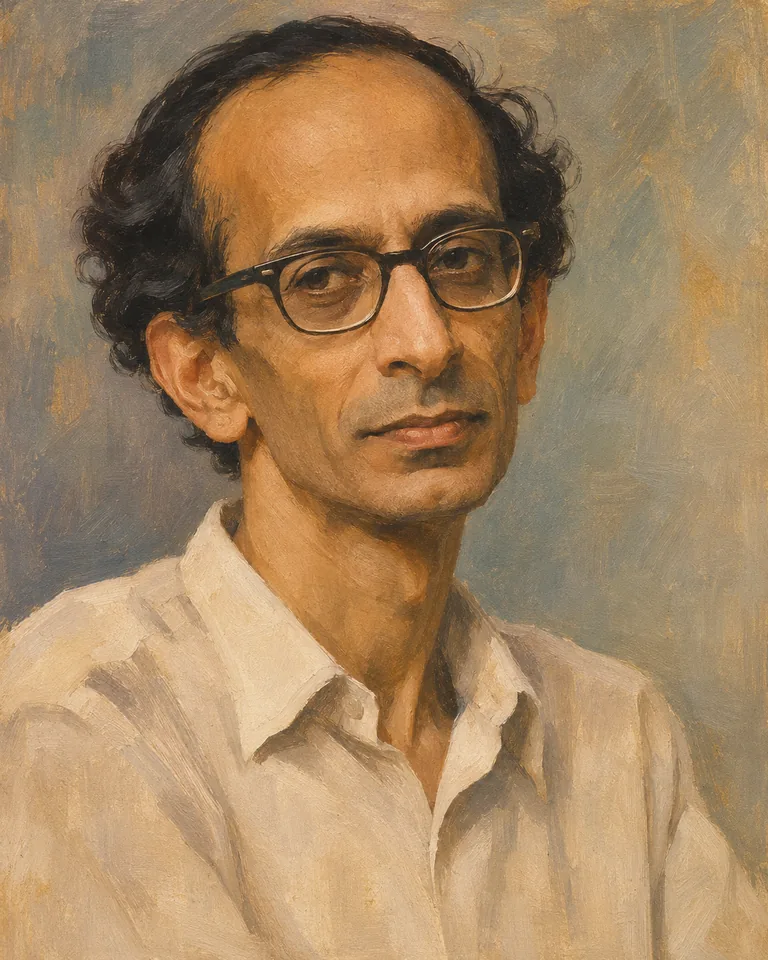
Nissim Ezekiel (1924-2004) was a central figure in this change. His first collection, A Time to Change (1952), helped define a more personal, controlled voice. Sixty Poems followed in 1953, The Unfinished Man in 1960, and The Exact Name in 1965. The poems explore relationships, religion, urban surroundings and the gap between public speech and private intention.
In "Night of the Scorpion", included in The Exact Name, a family and neighbours respond to a mother's suffering after a scorpion sting. The poem includes contrasting responses: traditional beliefs, practical attempts to help and the mother's concern for her children. Ezekiel allows the reader to notice both compassion and irony. He does not reduce the scene to a simple attack on village belief.
Ezekiel's "The Patriot" uses a deliberately marked Indian English voice. The speaker's phrases expose habits of public talk, identity and everyday language. The poem should be read as satire of a constructed speaker, not as evidence that all Indians speak in one way.
A. K. Ramanujan (1929-1993) wrote poetry that brings memory, family, culture and observation together. The Striders (1966) and Relations (1971) are major collections. His poem "A River" compares the familiar praise of a river with what poets often fail to notice about suffering. Its critique of received literary habits is part of its meaning.
Ramanujan also translated and studied works from Indian languages. His bilingual and scholarly interests shaped his writing. He shows that English-language poetry can grow out of deep knowledge of Tamil and Kannada traditions without simply copying their forms.
Kamala Das (1934-2009) brought an unusually direct personal voice to Indian English poetry. Summer in Calcutta (1965) contains "An Introduction", a poem that questions restrictions on identity, speech and female experience. It has often been discussed through confessional poetry, writing that openly explores intimate feelings and personal struggles. Her poem moves between private life and larger social expectations.
Das also wrote in Malayalam. This is important because her literary identity cannot be described through English alone. Her later autobiography My Story appeared in English in 1976, following an earlier Malayalam version. Dates and languages should be kept distinct when discussing her prose and verse.
Jayanta Mahapatra (1928-2023) began publishing collections in the 1970s, including Close the Sky, Ten by Ten (1971) and A Rain of Rites (1976). His poetry often connects landscape, memory, hunger and historical suffering. In "Hunger", an encounter exposes poverty and an unequal social relationship. The poem's force comes from its close attention to bodily need and the uneasy position of the observer.
Mahapatra's Relationship appeared in 1980 and received the Sahitya Akademi Award in 1981. It is a useful example of how a work can stand at the boundary between two literary periods. The award belongs to the following year, not to the publication date.
Other voices in modern poetry
Arvind Krishna Mehrotra (born 1947) experimented with image, arrangement and urban language. His collection Nine Enclosures (1976) places him among poets who brought new international influences into Indian verse. His later collection Middle Earth (1984) falls outside this period but shows the continued development of his work.
Keki N. Daruwalla (1937-2024) published Under Orion (1970), Apparition in April (1971) and Crossing of Rivers (1976). Landscape, violence and public experience are important in his poetry. His images are often sharp and physical. River scenes become ways to consider danger, change and human vulnerability.
R. Parthasarathy (born 1934) published the long poem Rough Passage (1977). Its divisions examine exile, cultural unease and the possibility of returning home. The poem asks how a writer educated in English relates to family language and cultural memory. Parthasarathy also edited Ten Twentieth-Century Indian Poets (1976), an influential anthology.
Dom Moraes (1938-2004) published A Beginning (1957), which won the Hawthornden Prize in 1958. His early work brought wide attention to a young Indian poet writing in English. His career reminds us that Indian English poetry developed in conversation with readers and publishers outside India as well as within it.
Gieve Patel (1940-2023) was a poet, painter and doctor. His Poems (1966) includes "On Killing a Tree", which turns a violent action into a careful study of process. His How Do You Withstand, Body (1976) continues his concern with the body, suffering and physical life. A clinical eye does not remove feeling from his poems; it makes the detail more troubling.
Dilip Chitre (1938-2009) worked in Marathi and English as a poet, translator and artist. His English collection Travelling in a Cage was published in 1980. Translation and movement between languages are central to his place in the period. His later work with the poetry of Tukaram belongs to the longer history of bringing Indian-language traditions to English readers.
Eunice de Souza (1940-2017) published Fix in 1979. Her concise, often ironic poems challenge assumptions about family, gender and religious upbringing. Her later Women in Dutch Painting (1988) belongs beyond the article's boundary.
These poets differed. Ezekiel's satirical speakers differ from Das's intimate voice. Ramanujan's cultural memory differs from Daruwalla's threatening landscapes. Their common achievement was to show that contemporary Indian lives could be addressed through many kinds of English poetry.
Drama and translation
Indian drama in these decades flourished in several languages. The English-language study of the period includes both plays originally written in English and English translations of Kannada, Marathi and Bengali works. This distinction matters because a play's first audience may have heard an entirely different language.
Girish Karnad (1938-2019) wrote major plays originally in Kannada. Yayati (1961) drew on a story from the Mahabharata. Tughlaq (1964) uses the medieval ruler Muhammad bin Tughlaq to explore idealism, authority and political failure. Although it is historical drama, its questions about leadership also speak to modern life. Karnad translated his own play into English.
Karnad's Hayavadana (1971), also originally written in Kannada, uses myth and folk-theatre devices to question what makes a person complete. Naga-Mandala was written much later, in the late 1980s, and its English version was published in 1990. The play uses folktales to examine marriage, storytelling and women's experience. It is included as a later work in Karnad's career, not as a 1970s publication.
Vijay Tendulkar (1928-2008) wrote primarily in Marathi. His Shantata! Court Chalu Aahe! became known in English as Silence! The Court Is in Session, translated by Priya Adarkar and published in English in 1978. A theatrical mock trial turns into an attack on a woman's private life. The play exposes how a group can disguise cruelty as entertainment or moral judgement.
Tendulkar's Ghashiram Kotwal (1972), originally in Marathi, combines political satire with music and theatrical movement. It considers the relationship between corrupt power and the people who serve it. The play's historical setting is part of its method, not proof that its only concern is the past.
Badal Sircar (1925-2011) wrote Evam Indrajit in Bengali in the 1960s. Its English translation by Girish Karnad was published in 1974. The play depicts repetitive middle-class existence and the difficulty of finding a distinctive purpose. Sircar later became strongly associated with Third Theatre, a form that sought direct contact with audiences beyond expensive conventional stages.
Asif Currimbhoy (1928-1994), unlike these three dramatists, wrote plays originally in English. The Doldrummers (1960) explores anxiety, relationships and dissatisfaction. His work demonstrates that English-language drama existed beside the much larger translation network of regional theatre.
Performance, translation and adaptation allowed writers from different language traditions to influence one another. The page and the stage were connected, but they were not the same medium.
An interesting story
In Bombay during the 1970s, a group of poets wanted greater control over how their books reached readers. Gieve Patel, Arun Kolatkar, Adil Jussawalla and Arvind Krishna Mehrotra became associated with Clearing House, a small publishing cooperative established in 1976. They did not wait for a large commercial publisher to decide which new verse mattered. Their work showed that modern Indian poetry needed practical support as well as original writing. Meanwhile, R. Parthasarathy's Ten Twentieth-Century Indian Poets, also published in 1976, helped bring these changing voices to students. These two developments illustrate different sides of literary culture: poets producing work together, and an editor making that work easier to study. The story is about publishing and community, not a single heroic genius.
Key terms
- Partition - the division of British India into India and Pakistan in 1947.
- Modernism - literature that experiments with form and explores uncertainty and modern life.
- Psychological novel - fiction that gives special attention to a character's mind and feelings.
- Social realism - writing that examines ordinary lives and social inequality in concrete detail.
- Linguistic experiment - a deliberate change to language, style or grammar for artistic effect.
- Irony - a contrast between what is said or expected and what is actually meant or happens.
- Satire - writing that exposes foolishness or injustice through humour or criticism.
- Confessional poetry - poetry that openly explores private feelings or personal conflict.
- Urban poetry - verse shaped by the experiences and settings of city life.
- Translation - the rendering of a work from one language into another.
- Bilingual writing - literary work connected with two languages.
- Memory - the recollection of the past as a source of a work's meaning.
- Historical fiction - a story that places invented characters or events in a historical setting.
- Folktale - a traditional story passed through a community, often in oral form.
- Political drama - a play that examines power, government or public conflict.
- Third Theatre - Badal Sircar's approach to direct, flexible performance outside conventional theatres.
- Small press - a publisher working on a limited scale, often supporting new authors.
- Literary anthology - a selected collection of works by different authors.
Criticism and scholarship
M. K. Naik's A History of Indian English Literature (1982) provided a major historical account of writing in English by Indian authors. It helped organise a large and varied field for students. The period divisions used here are working teaching categories and should not be mistaken for strict boundaries between generations or genres.
Meenakshi Mukherjee's The Twice Born Fiction (1971) offered a critical study of the Indian novel in English. Her work is important for understanding the relationship between inherited English novel forms and the Indian experiences these forms were asked to represent. The question was not whether Indian writers could imitate an English model, but how their fiction could develop its own subjects and methods.
R. Parthasarathy's anthology Ten Twentieth-Century Indian Poets (1976) helped introduce modern poets to a wider readership. By arranging selected voices together, it made differences in their style and outlook easier to study. An anthology shapes literary history because inclusion changes which writers are read in classrooms.
Later criticism continued to reassess this generation. Bruce King's Modern Indian Poetry in English (1987) belongs to the following decade, but it remains relevant as a critical account of the poetic changes considered here. Its later date should not be confused with the years in which the poets wrote their early books.
Important points to remember
- G. V. Desani published All About H. Hatterr in 1948.
- Khushwant Singh's Train to Pakistan appeared in 1956.
- Kamala Markandaya's Nectar in a Sieve appeared in 1954.
- Anita Desai's first novel was Cry, the Peacock (1963).
- Nissim Ezekiel's A Time to Change appeared in 1952.
- Kamala Das published Summer in Calcutta in 1965.
- R. Parthasarathy edited Ten Twentieth-Century Indian Poets in 1976.
- Girish Karnad's Tughlaq was originally written in Kannada.
- Vijay Tendulkar's Ghashiram Kotwal was originally written in Marathi.
- Badal Sircar's Evam Indrajit was written in Bengali.
How the period ends
By 1980, Indian English writing had developed far beyond one model of the nationalist novel or the lyrical poem. Fiction explored memory and inner conflict, while poetry drew from city life, personal speech and several Indian languages. Theatre circulated between stages and translations. Independence had created new institutions, but it had not removed social divisions or political uncertainty.
Anita Desai's In Custody (1984), Nayantara Sahgal's Rich Like Us (1985), and Karnad's Naga-Mandala of the late 1980s belong to the later careers of authors introduced here. The next stage of Indian English literature would include newer international readerships, wider publishing networks and different experiments in the novel. Some authors discussed here continued writing alongside those later voices.
A student should therefore remember both change and continuity. After 1957, poetry and drama gained remarkable new forms, but prose about Partition, class and language remained important. The story of this period does not end with a single book or event. It prepares the ground for the literary expansion of the 1980s and 1990s.
Important points to remember
- This article uses 1947-1980 as a teaching period, not a rigid career boundary.
- Modern Indian English poetry expanded strongly from the 1950s onward.
- Psychological fiction gave new attention to memory and the inner life.
- Translations carried Indian-language drama to English readers.
- Clear Light of Day was published in 1980.
- In Custody was published in 1984, outside this period.
- Rich Like Us appeared in 1985, after this period.
- Naga-Mandala is a later Karnad work, with an English edition in 1990.
Writers and works
| Writer | Dates | Main works | Remembered for |
|---|---|---|---|
| G. V. Desani | 1909-2000 | All About H. Hatterr (1948) | Experimental language and comic fiction |
| Khushwant Singh | 1915-2014 | Train to Pakistan (1956) | Partition novel and historical memory |
| Kamala Markandaya | 1924-2004 | Nectar in a Sieve (1954); Some Inner Fury (1955) | Rural life, development and women |
| Nayantara Sahgal | born 1927 | A Time to Be Happy (1958); Storm in Chandigarh (1969); Rich Like Us (1985, later work) | Political fiction and moral choice |
| Anita Desai | born 1937 | Cry, the Peacock (1963); Fire on the Mountain (1977); Clear Light of Day (1980); In Custody (1984, later work) | Psychological fiction and memory |
| Nirad C. Chaudhuri | 1897-1999 | The Autobiography of an Unknown Indian (1951); The Continent of Circe (1965) | Memoir and cultural argument |
| Nissim Ezekiel | 1924-2004 | A Time to Change (1952); The Exact Name (1965); Night of the Scorpion; The Patriot | Urban irony and modern Indian English poetry |
| A. K. Ramanujan | 1929-1993 | The Striders (1966); Relations (1971); A River | Cultural memory, poetry and translation |
| Kamala Das | 1934-2009 | Summer in Calcutta (1965); An Introduction; My Story (English, 1976) | Direct personal voice and women's experience |
| Jayanta Mahapatra | 1928-2023 | Close the Sky, Ten by Ten (1971); Hunger; Relationship (1980) | Hunger, landscape and remembered history |
| Arvind Krishna Mehrotra | born 1947 | Nine Enclosures (1976); Middle Earth (1984, later work) | Experimental modern verse |
| Keki N. Daruwalla | 1937-2024 | Under Orion (1970); Crossing of Rivers (1976) | Physical imagery and public experience |
| R. Parthasarathy | born 1934 | Ten Twentieth-Century Indian Poets (ed., 1976); Rough Passage (1977) | Exile, cultural identity and literary editing |
| Dom Moraes | 1938-2004 | A Beginning (1957) | Early international recognition as a poet |
| Gieve Patel | 1940-2023 | Poems (1966); On Killing a Tree; How Do You Withstand, Body (1976) | Body, medicine and ethical observation |
| Dilip Chitre | 1938-2009 | Travelling in a Cage (1980) | Marathi-English literary exchange |
| Eunice de Souza | 1940-2017 | Fix (1979); Women in Dutch Painting (1988, later work) | Concise, ironic poetry on gender and identity |
| Girish Karnad | 1938-2019 | Tughlaq (Kannada, 1964); Hayavadana (Kannada, 1971); Naga-Mandala (later play; English 1990) | Historical, mythic and folk-based drama |
| Vijay Tendulkar | 1928-2008 | Silence! The Court Is in Session (English translation, 1978); Ghashiram Kotwal (Marathi, 1972) | Social power and political theatre |
| Badal Sircar | 1925-2011 | Evam Indrajit (Bengali, 1960s; English translation 1974) | Middle-class life and Third Theatre |
| Asif Currimbhoy | 1928-1994 | The Doldrummers (1960) | Drama originally written in English |
Quick revision - 50 points
Open the 50 pointsClose the list
- India became independent in August 1947.
- Partition accompanied independence and caused mass displacement.
- The Constitution of India came into effect on 26 January 1950.
- India's first general elections took place in 1951-52.
- The States Reorganisation Act changed state boundaries in 1956.
- The Emergency restricted civil liberties from 1975 to 1977.
- Kamala Markandaya's Nectar in a Sieve portrays rural poverty and industrial change.
- Writers Workshop was founded in Calcutta in 1958.
- Clearing House became a Bombay poetry publishing cooperative in 1976.
- The Sahitya Akademi was founded in 1954.
- G. V. Desani published All About H. Hatterr in 1948.
- Desani's novel is known for language experiments and comic episodes.
- Khushwant Singh published Train to Pakistan in 1956.
- Train to Pakistan is set chiefly in the village of Mano Majra.
- Kamala Markandaya's Nectar in a Sieve appeared in 1954.
- Rukmani is the narrator of Nectar in a Sieve.
- Nayantara Sahgal published A Time to Be Happy in 1958.
- Sahgal's Storm in Chandigarh appeared in 1969.
- Anita Desai's first novel was Cry, the Peacock (1963).
- Maya is the central character in Cry, the Peacock.
- Anita Desai published Fire on the Mountain in 1977.
- Clear Light of Day appeared in 1980.
- In Custody appeared later, in 1984.
- Nirad C. Chaudhuri published The Autobiography of an Unknown Indian in 1951.
- Chaudhuri's The Continent of Circe appeared in 1965.
- Nissim Ezekiel's first collection was A Time to Change (1952).
- Ezekiel's The Exact Name appeared in 1965.
- Night of the Scorpion shows different responses to a mother's suffering.
- Ezekiel's The Patriot uses a deliberately marked Indian English voice.
- A. K. Ramanujan published The Striders in 1966.
- Ramanujan's A River questions what conventional poetry overlooks.
- Kamala Das published Summer in Calcutta in 1965.
- An Introduction is a poem by Kamala Das.
- Kamala Das's My Story appeared in English in 1976.
- Jayanta Mahapatra published A Rain of Rites in 1976.
- Mahapatra's Hunger explores poverty and unequal relations.
- Mahapatra's Relationship appeared in 1980 and won a Sahitya Akademi Award in 1981.
- Arvind Krishna Mehrotra published Nine Enclosures in 1976.
- Keki N. Daruwalla published Under Orion in 1970.
- R. Parthasarathy published Rough Passage in 1977.
- Parthasarathy edited Ten Twentieth-Century Indian Poets in 1976.
- Dom Moraes published A Beginning in 1957.
- Gieve Patel's Poems (1966) includes On Killing a Tree.
- Dilip Chitre published Travelling in a Cage in 1980.
- Eunice de Souza's first collection was Fix (1979).
- Girish Karnad's Tughlaq (1964) was originally written in Kannada.
- Karnad's Hayavadana (1971) uses myth and folk-theatre devices.
- Vijay Tendulkar's Ghashiram Kotwal (1972) was written in Marathi.
- Badal Sircar's Evam Indrajit was originally written in Bengali.
- Asif Currimbhoy wrote The Doldrummers (1960) originally in English.
Quick quiz - 25 questions
Tap an answer to see at once if it is right. You do not need to log in.
Open the 25 questionsClose the quiz
1In which year did India become independent?
Answer: A. India gained independence in August 1947, when Partition also took place.
2When did the Constitution of India come into effect?
Answer: B. The Constitution came into effect on 26 January 1950.
3Which act reorganised many Indian state boundaries in 1956?
Answer: C. The States Reorganisation Act of 1956 changed many boundaries, largely in response to language demands.
4Which years cover the Emergency discussed in this article?
Answer: D. The Emergency lasted from 1975 to 1977 and restricted civil liberties.
5Which literary publishing organisation was founded in Calcutta in 1958?
Answer: A. P. Lal founded Writers Workshop in Calcutta in 1958.
6Who wrote All About H. Hatterr (1948)?
Answer: B. G. V. Desani wrote this experimental comic novel.
7Which novel is chiefly set in the village of Mano Majra?
Answer: C. Khushwant Singh's Train to Pakistan places Partition in the village of Mano Majra.
8Who narrates Nectar in a Sieve?
Answer: D. Rukmani narrates the hardships of her farming family in Markandaya's novel.
9Which novel began Nayantara Sahgal's career as a novelist in 1958?
Answer: A. Sahgal published A Time to Be Happy in 1958.
10Which novel was Anita Desai's first, published in 1963?
Answer: B. Cry, the Peacock was Anita Desai's first novel.
11Who wrote The Autobiography of an Unknown Indian (1951)?
Answer: C. Nirad C. Chaudhuri combined personal memory with cultural and historical reflection in the book.
12Which was Nissim Ezekiel's first poetry collection?
Answer: D. Ezekiel's first collection, A Time to Change, appeared in 1952.
13In which Ezekiel poem do a family and neighbours react to a mother's suffering?
Answer: A. Night of the Scorpion presents different responses to a scorpion sting.
14Who wrote the poem A River, which questions earlier descriptions of a river?
Answer: B. A. K. Ramanujan's A River questions what conventional praise overlooks.
15Which Kamala Das collection appeared in 1965?
Answer: C. Kamala Das published Summer in Calcutta in 1965.
16Which poem by Jayanta Mahapatra explores poverty and unequal relations?
Answer: D. Mahapatra's Hunger examines human need and unequal social relations.
17Who edited Ten Twentieth-Century Indian Poets (1976)?
Answer: A. R. Parthasarathy edited the anthology in 1976.
18Which collection was Keki N. Daruwalla's first, published in 1970?
Answer: B. Daruwalla's Under Orion appeared in 1970.
19Which poet published A Beginning in 1957?
Answer: C. Dom Moraes published A Beginning in 1957 and received the Hawthornden Prize in 1958.
20Who wrote On Killing a Tree?
Answer: D. Gieve Patel's poem is included in his 1966 collection Poems.
21Who published Travelling in a Cage in 1980?
Answer: A. Dilip Chitre wrote across Marathi and English and published Travelling in a Cage in 1980.
22Which poet published the collection Fix in 1979?
Answer: B. Fix was Eunice de Souza's first poetry collection.
23Which Girish Karnad play of 1964 concerns a medieval ruler and political failure?
Answer: C. Tughlaq uses Muhammad bin Tughlaq to explore authority and idealism.
24Which English translation of a Vijay Tendulkar play appeared in 1978?
Answer: D. Priya Adarkar translated Tendulkar's Marathi play into English, with publication in 1978.
25In which language was Badal Sircar's Evam Indrajit originally written?
Answer: A. Sircar wrote Evam Indrajit in Bengali; Karnad's English translation appeared in 1974.
Frequently asked questions
Why does the article begin in 1947 when modern Indian English poetry became prominent after 1957?
The article follows the Indian English Literature series period of 1947-1980. It gives extra attention to writing after 1957 because modern poetry and new dramatic forms expanded strongly in those years. The earlier years still matter for Partition fiction and the beginnings of post-independence writing.
Who are the important modern Indian English poets of this period?
Nissim Ezekiel, A. K. Ramanujan, Kamala Das and Jayanta Mahapatra are central figures. Dom Moraes, Daruwalla, Mehrotra, Parthasarathy, Patel, Chitre and de Souza add distinctive voices. Their styles and subjects are not all the same.
Why is Train to Pakistan important in Indian English literature?
Khushwant Singh's 1956 novel places Partition in the village of Mano Majra. It shows how fear and communal conflict affect ordinary relationships. The setting makes a major historical event understandable through particular lives.
What is a psychological novel, and how does Anita Desai use it?
A psychological novel gives special attention to thoughts and feelings. Anita Desai uses this method in Cry, the Peacock (1963) to explore Maya's emotional distress and troubled marriage. She also uses memory and family tensions in Clear Light of Day (1980).
Were Girish Karnad, Vijay Tendulkar and Badal Sircar writing originally in English?
No. Karnad's major early plays were written in Kannada, Tendulkar wrote in Marathi, and Sircar wrote in Bengali. Their plays became widely studied in English translation. Asif Currimbhoy, by contrast, wrote plays originally in English.
Which important works by these writers appeared after 1980?
Anita Desai's In Custody appeared in 1984, Nayantara Sahgal's Rich Like Us in 1985, and Karnad's Naga-Mandala was written in the late 1980s and published in English in 1990. They are later works discussed to show the writers' continuing careers. They are not publications of the 1947-1980 period.
Sources
- M. K. Naik, A History of Indian English Literature, Sahitya Akademi, 1982.
- Meenakshi Mukherjee, The Twice Born Fiction, Heinemann, 1971.
- R. Parthasarathy, Ten Twentieth-Century Indian Poets, Oxford University Press, 1976.
- Bruce King, Modern Indian Poetry in English, Oxford University Press, 1987.
- Khushwant Singh, Train to Pakistan, Chatto & Windus, 1956.
- Badal Sircar, Evam Indrajit, Oxford University Press, 1974.
- Vijay Tendulkar, Silence! The Court Is in Session, Oxford University Press, 1978.
Afsar Khan, Ph.D. English
Test your knowledge
Check what you have learned with quizzes and MCQs.