
On this page
In 1876 a book of French poems turned into English verse came out with one name on its title page, Toru Dutt. Edmund Gosse reviewed it in The Examiner. K. R. Srinivasa Iyengar reports that Gosse declared that, if modern French literature were lost, a great number of its poems might be rebuilt from this Indian version. Iyengar adds that French and English were alike foreign languages to the young translator.
This article covers the years from 1857 to 1920. The first date is the year of the revolt against Company rule and of the first Indian universities. The second is a working boundary, like the dates in the last article. The next article begins with the 1920s, when the independence movement under Mohandas K. Gandhi became a mass movement.
The article first describes the world of these years, and then the writing that grew out of it. Every hard term is explained where it first appears.
The world of this period
Political life
The revolt of 1857, which British writers called the Mutiny, ended the rule of the East India Company. Queen Victoria's proclamation of 1 November 1858 declared that India would from then on be governed by the Crown. This article calls the new system Crown rule. The Crown's chief officer in India was the Viceroy.
Indians soon found a public voice of their own. In December 1885 the Indian National Congress met at Bombay. Allan Octavian Hume, a retired civil servant, was its general secretary, and W. C. Bonnerjee, a Calcutta lawyer, was elected its president. Seventy-two delegates attended. The Congress began as a loyal and moderate association, and it was not at first a political party. Its demand for independence grew into the mass movement led by Gandhi in the 1920s and 1930s.
In 1905 the Viceroy, Lord Curzon, divided Bengal into two parts, and this became known as the Partition of Bengal. Indians answered with the swadeshi movement, a plan to boycott British goods and to use Indian-made goods instead. In 1911 the two parts of Bengal were reunited, and the capital of British India moved to Delhi.
Social life
Iyengar describes Bengal in the later nineteenth century as seething with literary activity of all kinds. The great Bengali novelist Bankimchandra Chatterji was then producing his novels in quick succession. He began one novel in English but did not finish it, and he wrote most of his work in his mother tongue. Iyengar says that his presence on the scene inspired other writers, and that the last quarter of the century saw a great increase in English and vernacular publications. A vernacular is a local language of the country, such as Bengali or Gujarati. Iyengar writes that all India seemed to have woken from a long stupor. The movement of reform and new writing in these years is known as the Indian renaissance.
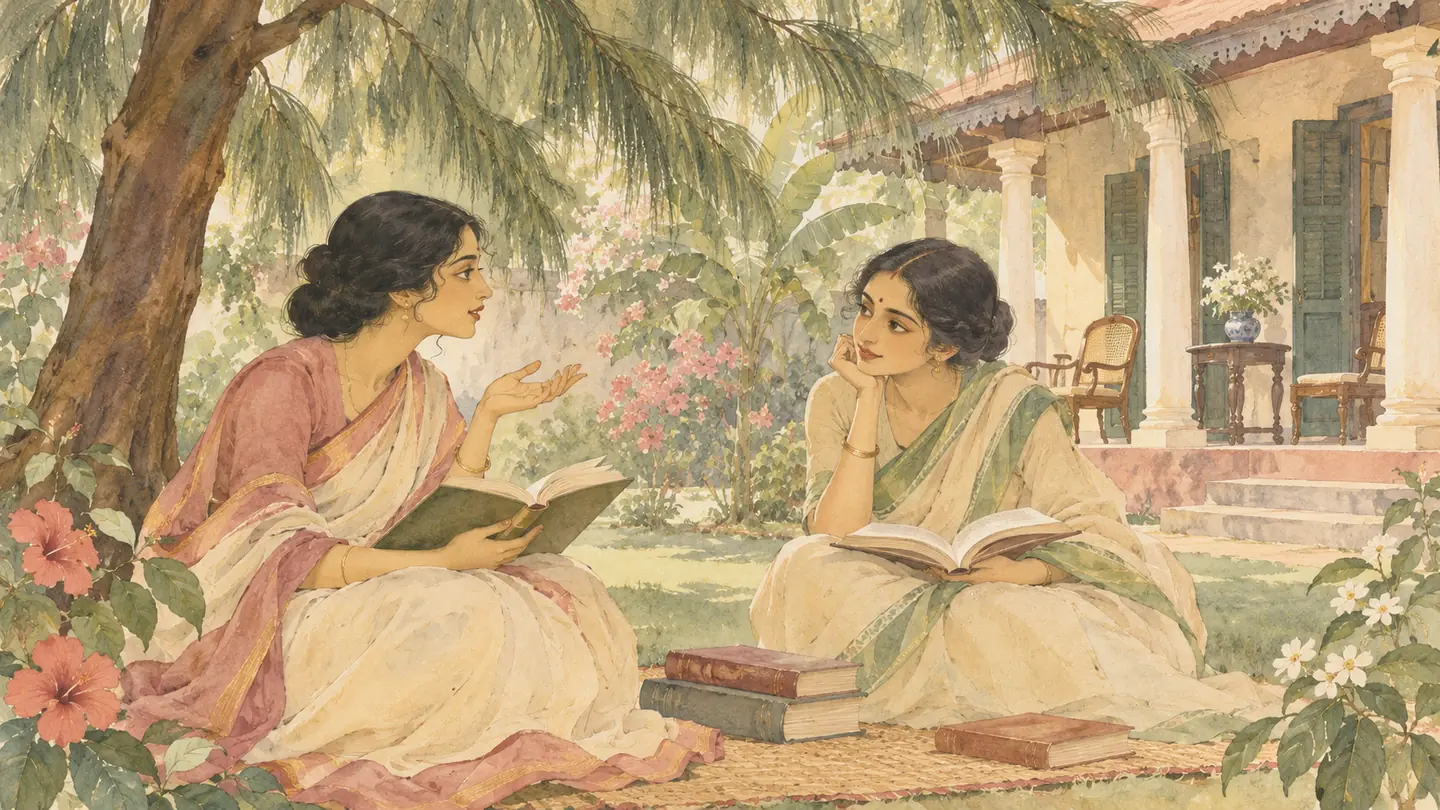
Women of educated families took a growing share in this world. Aru and Toru Dutt learned French and English abroad, and Toru wrote a French novel as well as English verse. Their father, Gobind Chandra Dutt, also published English verse, and Iyengar calls the family a cultured one.
Reform remained a public cause. Behramji Malabari wrote against the marriage of very young girls and worked to raise the "age of consent". Iyengar says his work bore fruit in the raising of the age of consent and in public attention to the plight of the Indian widow.
Economic life
Few writers of the time lived by writing alone. Most earned a living in government service, law, teaching or journalism. Romesh Chunder Dutt passed the Indian Civil Service examination in England and rose to be a divisional commissioner in Bengal. Nagesh Wishwanath Pai was first a pleader in the Bombay High Court and then a government reader at Sholapur. Manmohan Ghose taught English literature at the Presidency College in Calcutta. Sri Aurobindo was for a time a professor at Baroda. Malabari had to earn his own bread from about the age of twelve.
Many books were printed in London. Toru Dutt's ballads, which are stories told in verse, came out in 1882 from the London firm of Kegan Paul. Sarojini Naidu's The Bird of Time came out in 1912 from William Heinemann of London and the John Lane Company of New York. Romesh Dutt's verse versions of the Mahabharata and the Ramayana, the two great epics of India, won a place in Dent's Everyman's Library, Iyengar notes. Dutt also wrote books on the economic condition of India in the nineteenth century.
Schools, colleges and the press
Study abroad shaped several poets. Toru Dutt attended a French school at Nice from 1869, and in 1871 the sisters went to the Higher Lectures for Women at Cambridge. Sri Aurobindo was sent to England as a boy and entered the University of Cambridge. Sarojini Naidu went to London and Cambridge on a state scholarship from the Nizam of Hyderabad. Manmohan Ghose also studied at Oxford.
Journals gave new writers their first readers. Toru Dutt's English novel appeared in The Bengal Magazine. B. R. Rajam Iyer's novel Vasudeva Sastri came out in Prabuddha Bharata in the closing years of the nineteenth century. Sri Aurobindo's long essays appeared in the philosophical review Arya between 1914 and 1921.
Religion
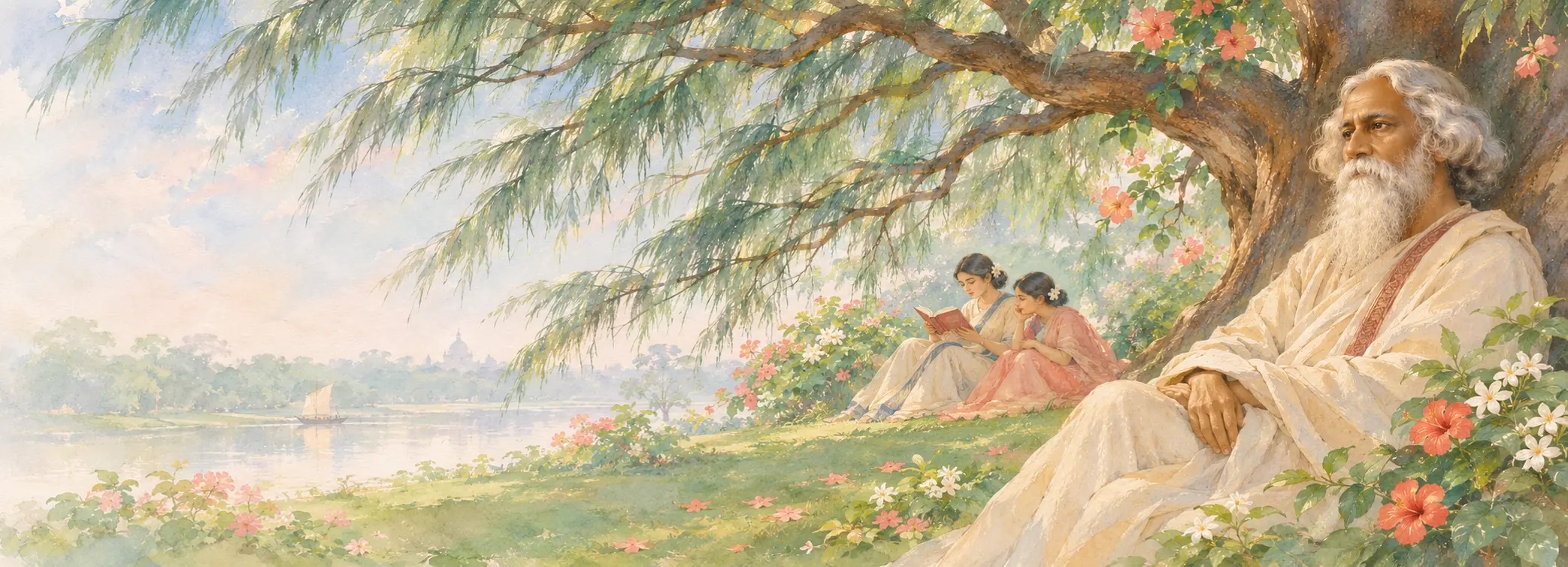
Iyengar holds that Rammohan Roy's work awakened Hindu society. He says that this awakening bore fruit in reforms such as the end of sati and the remarriage of widows. It also produced leaders such as Ramakrishna and Vivekananda, Dayanand Saraswati, Sri Aurobindo and Gandhi. Rabindranath Tagore was born into a family that took part in the Brahmo Samaj, the society founded by Rammohan Roy. Swami Vivekananda is described in the section on prose.
Did you know?
Behramji Malabari became one of the best-known Indian writers of his day. Iyengar says that he passed the matriculation examination only at the fourth attempt. He had been earning his own living since he was about twelve years old.
Important points to remember
- Queen Victoria's proclamation of 1 November 1858 began Crown rule in India.
- The Indian National Congress met at Bombay in December 1885, with W. C. Bonnerjee as president.
- Lord Curzon divided Bengal in 1905, and the two parts were reunited in 1911.
- The swadeshi movement was a boycott of British goods.
- Bankimchandra Chatterji began a novel in English but wrote most of his work in Bengali.
- Many writers of the period worked as civil servants, lawyers, professors or journalists.
- Toru Dutt's ballads were published in London in 1882.
- Sarojini Naidu's The Bird of Time was published in London and New York in 1912.
- The Dutt sisters attended lectures for women at Cambridge in 1871.
- Iyengar names Ramakrishna, Vivekananda, Dayanand Saraswati, Aurobindo and Gandhi as leaders of the awakening.
Literature in this period
The language and the readers
Iyengar uses the word Indo-Anglian for an Indian who writes in English. The Indo-Anglians of these years were a small group. Several had studied in England or France, and some wrote in more than one language. Toru Dutt wrote in English and French, and Rabindranath Tagore wrote mainly in Bengali. Their books were often printed in London, as the first part of this article showed.
The poets borrowed forms from English verse, and their subjects were often Indian. Toru Dutt retold the legends of her own country, and Sarojini Naidu wrote about its fishermen and weavers. Novelists in English were few, and Iyengar says that very few Indians tried English fiction before 1900.
Toru Dutt
Toru Dutt was born on 4 March 1856 and died on 30 August 1877, aged twenty-one. She came back to Bengal at the end of 1873, after her years at Nice and Cambridge. Her sister Aru, with whom she had studied, died on 23 July 1874, aged twenty.
Her first book was A Sheaf Gleaned in French Fields, published in 1876. It holds English verse translations of French poems, mostly by Romantic poets. Only Toru's name stood on the title page. For that reason Gosse, in his review in The Examiner, credited her with Aru's pieces as well.
The book that keeps her name alive is Ancient Ballads and Legends of Hindustan, which appeared in 1882, five years after her death. The London firm of Kegan Paul published it, with an introductory memoir by Gosse. It contains nine ballads and seven occasional poems. The ballads retell Indian legends, among them the stories of Savitri, Dhruva, Prahlad and Ekalavya, and the story of Dasaratha and Sindhu. Some pieces use the octosyllabic line, a line of eight syllables. Others use blank verse, which is unrhymed verse in lines of ten syllables.
The best-known of the occasional poems is Our Casuarina Tree, which is part of the same volume. It is a poem of memory. The poet recalls her brother Abju, who died in 1865, and she compares the murmur of the tree to the sound of the sea on a shingle beach.
Toru Dutt also wrote novels. Her French novel, Le Journal de Mademoiselle d'Arvers, was published in Paris in 1879. Her English novel, Bianca, or The Young Spanish Maiden, appeared in The Bengal Magazine from January to April 1878. Both were printed after her death.
Epic and narrative verse
Romesh Chunder Dutt (1848-1909) came to literature from public life. He retired from the civil service before he was fifty. Iyengar adds that he sat in the Legislative Council and served the state of Baroda as revenue minister and as dewan, the chief minister of the state.
Dutt published Lays of Ancient India in 1894. His best-known verse work is a pair of retellings of the two great epics. The Mahabharata version appeared in 1898, and Iyengar dates the Ramayana version to 1900. Both are written in couplets, which are pairs of rhymed lines, in the Locksley Hall metre, with prose passages that join the parts of the story together.
Nabokissen Ghose (1837-1918) wrote under the name Ram Sharma. Debendrachandra Mullick collected his verse. The titles include The Last Day, Shiva Ratri, Bhagabati Gita and Daksha Yagna.
Nagesh Wishwanath Pai, who was born about 1860, wrote The Angel of Misfortune (1904). It is a metrical romance, which is a long story of adventure told in verse. It tells of King Vikrama in ten books and more than 5,000 lines of blank verse. Pai died about 1920.
Manmohan Ghose
Manmohan Ghose was the elder brother of Sri Aurobindo. He went to England early in his life, and he studied at Oxford. In 1890 his poems appeared in Primavera, a book of verse by four young poets. The other three were Cripps, Binyon and Stephen Phillips.
He later taught English literature at the Presidency College in Calcutta. His books of verse include Love Songs and Elegies. His wife died in 1918, and in his last years he lost his sight. He died in 1924.
Sri Aurobindo
Sri Aurobindo was born at Calcutta on 15 August 1872 and died at Pondicherry on 5 December 1950. In 1908 he was imprisoned, and afterwards he settled at Pondicherry. His English verse includes the narrative poems Urvasie, Love and Death, Baji Prabhou and Vidula. A narrative poem is a poem that tells a story. He also wrote the play Perseus the Deliverer, and he translated Kalidasa's Vikramorvasie and C. R. Das's Sagar-Sangit.
His prose belongs to the review Arya, where his long essays appeared from 1914 to 1921. Several of his best-known books grew out of those pages. The Life Divine appeared as a book in 1939. Essays on the Gita came out in 1922. The other works include The Future Poetry, The Synthesis of Yoga and The Secret of the Veda.
Sarojini Naidu
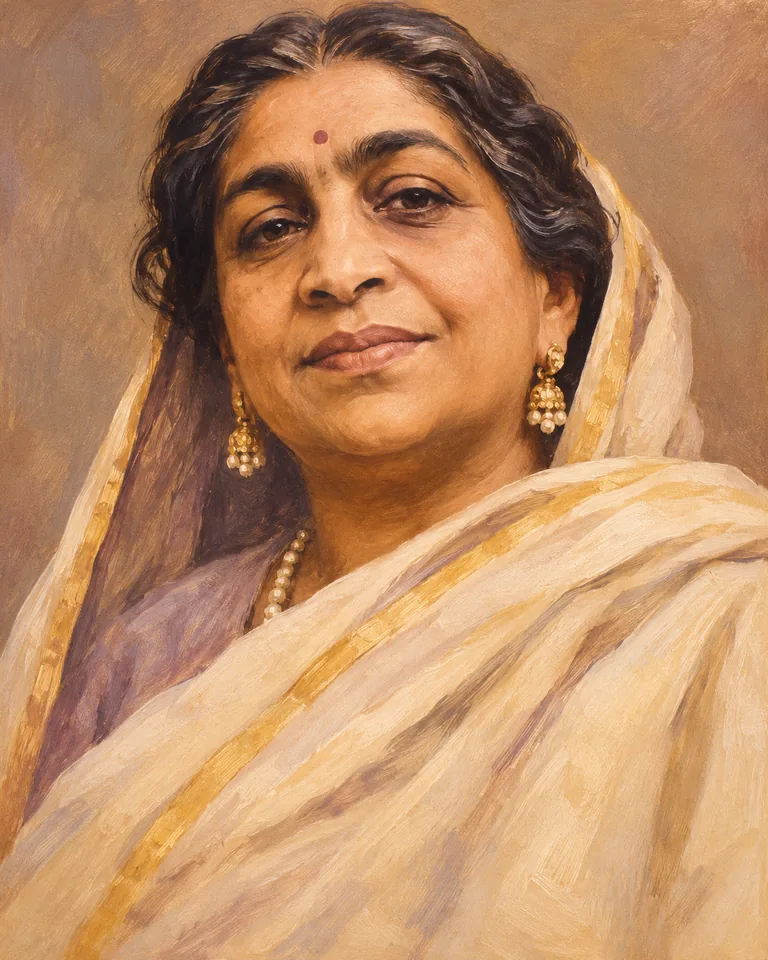
Sarojini Naidu was born at Hyderabad on 13 February 1879 and died at Lucknow on 2 March 1949. Her gifts showed early, for she passed the Madras matriculation at the age of twelve. She married Dr. Naidu in spite of caste prejudice, as Iyengar notes.
She published The Golden Threshold in 1905, The Bird of Time in 1912 and The Broken Wing in 1917. The Bird of Time carries an introduction by Gosse, and it contains the poem The Bangle Sellers. Iyengar names a group of her short poems: Coromandel Fishers, Indian Weavers, Palanquin-Bearers, To a Buddha Seated on a Lotus and The Flute-Player of Brindaban.
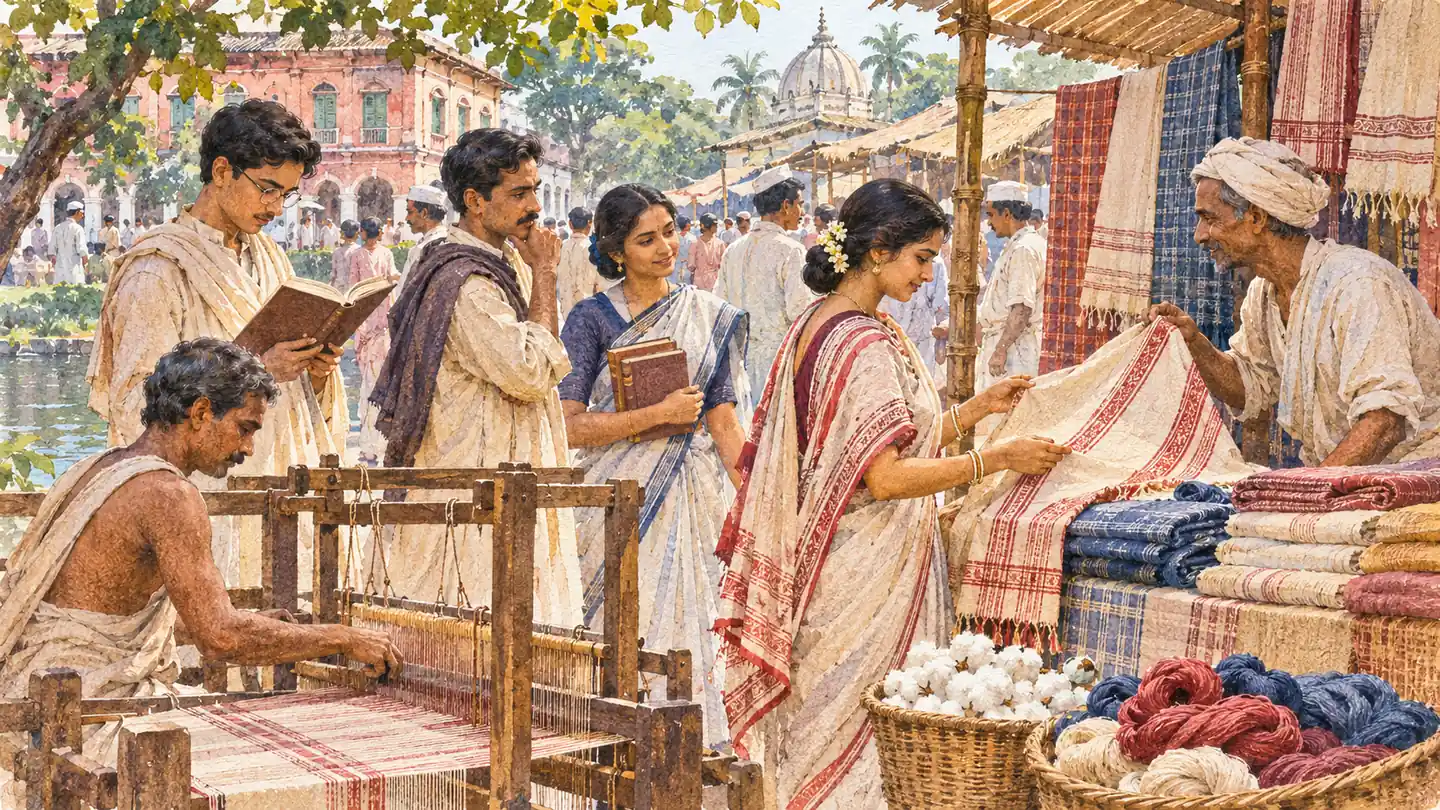
Most of these are lyrics, which are short poems that express a feeling or picture a scene. Many take their subjects from working people, such as fishermen, weavers, bangle-sellers and palanquin-bearers. She is known as the Nightingale of India.
Rabindranath Tagore
Rabindranath Tagore was born in 1861 and died on 7 August 1941. His grandfather Dwarkanath was a friend of Rammohan Roy, and his father Debendranath, called the Maharshi, was a pillar of the Brahmo Samaj. Iyengar says that Tagore was prominent in the agitation against the Partition of Bengal, though he did not follow its more extreme turns.
Tagore wrote mainly in Bengali, but he also made English versions of his own work. Gitanjali appeared in Bengali in 1910. The English Gitanjali followed in 1912, with an introduction by W. B. Yeats. In 1913 Tagore received the Nobel Prize in Literature. The citation praised his "profoundly sensitive, fresh and beautiful verse". He also translated The Gardener and The Crescent Moon himself.
He was knighted in 1915. After the Jallianwala Bagh massacre of 1919 he gave up the knighthood.
The Home and the World appeared in Bengali as Ghare Baire in 1916, and in English in 1919. The novel is set in the swadeshi years, and three people tell it in turn: Nikhil, Bimala and Sandip. Two more of his novels, Gora and The Wreck, are also known to English readers. His plays reached English readers in versions such as Chitra, Sacrifice, King and Queen and The Post Office.
Fiction
Iyengar notes that very few Indians attempted English fiction before 1900. English readers met Bankimchandra Chatterji through translation. Iyengar lists English versions of his novels, among them The Poison Tree (1884), Kapalkundala (1885), Durgeshnandini (1890), Krishnakanta's Will (1895) and The Two Rings (1897).
Among Indians who wrote novels in English, B. R. Rajam Iyer wrote Vasudeva Sastri, which appeared in Prabuddha Bharata and was republished in Rambles in Vedanta in 1905. He died at the age of twenty-six. A. Madhaviah wrote Thillai Govindan and Panju. T. Ramakrishna wrote Padmini (1903) and The Dive for Death (1912).
Purdah is the custom of keeping women out of the sight of men who are not close relatives. Cornelia Sorabji's books include Love and Life behind the Purdah (1901), Sun-Babies (1904) and Between the Twilights (1908). Jogendra Singh wrote Nur Jahan (1909) and Nasrin (1915). S. K. Ghosh published The Prince of Destiny (1909), and S. M. Mitra published Hindupore (1909). Romesh Chunder Dutt's novels The Lake of Palms (1902) and The Slave Girl of Agra (1909) also appeared in English.
Prose and journalism
Behramji Malabari (1853-1912) was born at Surat. He studied at the Surat Mission School under the Rev. Nixon, and he earned his living from about the age of twelve. His English verse was published as The Indian Muse in English Garb in 1876. His prose books include Gujarat and Gujaratis (1882) and The Indian Eye on English Life (1893). A life of Malabari by Gidumal carries an introduction by Florence Nightingale.
Nagesh Wishwanath Pai published Stray Sketches in Chakmakpore in 1894. It is a book in prose.
Swami Vivekananda, Iyengar says, was the first to put Indian philosophy on the world map. He lectured on Karma Yoga, Bhakti Yoga, Raja Yoga and Jnana Yoga. Iyengar adds that his active career lasted only about ten years.
An interesting story
Sarojini Naidu began as a student in England who wrote in the manner of English verse. Edmund Gosse read her early poems and gave her plain advice. She should stop writing about robins and skylarks, he said, and write about her own country. She took the advice. She destroyed her imitative verse and started again, and she turned to the fishermen, weavers and bangle-sellers of India. Her first book of poems, The Golden Threshold, appeared in 1905. Gosse later wrote the introduction to her book The Bird of Time, which was published in 1912.
Key terms
- Crown rule - the direct government of India by the British Crown after 1858.
- Viceroy - the chief officer of the Crown in India.
- Indian National Congress - the association founded at Bombay in 1885 that grew into the main movement for independence.
- Partition of Bengal - Lord Curzon's division of Bengal into two parts in 1905.
- Swadeshi - the movement to boycott British goods and use Indian-made goods.
- Vernacular - a local language of the country, such as Bengali or Gujarati.
- Indian renaissance - the movement of reform and new writing in nineteenth-century India.
- Ballad - a story told in verse.
- Epic - a long poem about heroes and great events.
- Indo-Anglian - Iyengar's word for an Indian who writes in English.
- Octosyllabic line - a line of verse with eight syllables.
- Blank verse - unrhymed verse in lines of ten syllables.
- Dewan - the chief minister of a state.
- Couplet - a pair of rhymed lines.
- Locksley Hall metre - the long rhymed couplet of Tennyson's poem Locksley Hall.
- Metrical romance - a long story of adventure told in verse.
- Lyric - a short poem that expresses a feeling or pictures a scene.
- Purdah - the custom of keeping women out of the sight of men who are not close relatives.
Criticism and scholarship
The main survey behind these notes is K. R. Srinivasa Iyengar's The Indian Contribution to English Literature (1945). Iyengar judges the writers one by one, and his verdicts shape much of what follows.
Edmund Gosse, an English critic, stood behind several of these poets. He reviewed A Sheaf Gleaned in French Fields in The Examiner, wrote the memoir for the 1882 edition of Toru Dutt's ballads, and introduced The Bird of Time. Iyengar judges that Toru Dutt handled the octosyllabic line well and finds her blank verse rather stiff.
George Sampson, in the Concise Cambridge History of English Literature, called Manmohan Ghose the most remarkable Indian poet in English. Iyengar takes a cooler view of Ram Sharma. He records a claim that Ram Sharma was perhaps the greatest Indian poet in English verse, and he thinks the claim overstated.
Iyengar calls Sri Aurobindo the most outstanding Indo-Anglian and notes that Aurobindo wrote only in English. He also quotes Aurobindo on Bankim's "religion of patriotism". On Tagore, Iyengar treats the Nobel award of 1913 as a landmark for Indian writing in English. He also warns against overrating it.
Important points to remember
- Toru Dutt (1856-1877) published A Sheaf Gleaned in French Fields in 1876.
- Gosse wrote the memoir for Toru Dutt's Ancient Ballads and Legends of Hindustan (1882).
- Romesh Chunder Dutt retold the Mahabharata in couplets and published it in 1898.
- Manmohan Ghose was one of four poets in Primavera (1890).
- Sri Aurobindo's essays appeared in Arya from 1914 to 1921.
- Sarojini Naidu published The Golden Threshold (1905), The Bird of Time (1912) and The Broken Wing (1917).
- Tagore's English Gitanjali (1912) carried an introduction by W. B. Yeats.
- Tagore received the Nobel Prize in Literature in 1913.
- The Home and the World appeared in Bengali in 1916 and in English in 1919.
- Cornelia Sorabji published Love and Life behind the Purdah in 1901.
How the period ends
The dates in this article are working boundaries, and the writers did not stop in 1920. In the 1920s the independence movement under Gandhi became a mass movement, and the next article begins there.
Several lines of this story close near the boundary. Sri Aurobindo's review Arya ended in 1921, and Essays on the Gita came out in 1922. Visva-Bharati at Shantiniketan became a university in 1921. Manmohan Ghose died in 1924. In 1925 Sarojini Naidu became the first Indian woman to preside over the Indian National Congress.
Other careers ran on. Tagore died in 1941, and Sarojini Naidu died in 1949. Sri Aurobindo's Collected Poems and Plays appeared in 1942. His long poem Savitri: A Legend and a Symbol was published in 1950, the year of his death. Toru Dutt had told the story of Savitri in a ballad long before, in the book of 1882.
The next article takes up the novelists and prose writers of the freedom struggle, such as Mulk Raj Anand, R. K. Narayan, Raja Rao, Gandhi and Nehru.
Important points to remember
- Sri Aurobindo's review Arya ended in 1921.
- Tagore's Visva-Bharati became a university in 1921.
- Manmohan Ghose died in 1924.
- Sarojini Naidu became the first Indian woman president of the Congress in 1925.
- Tagore died in 1941, and Sarojini Naidu died in 1949.
- Sri Aurobindo's Collected Poems and Plays appeared in 1942.
- Savitri: A Legend and a Symbol was published in 1950.
- The next article covers the writers of the freedom struggle.
Writers and works
| Writer | Dates | Main works | Remembered for |
|---|---|---|---|
| Toru Dutt | 1856-1877 | A Sheaf Gleaned in French Fields (1876); Ancient Ballads and Legends of Hindustan (1882); Our Casuarina Tree | Verse translations from French and ballads from Indian legend |
| Romesh Chunder Dutt | 1848-1909 | Lays of Ancient India (1894); Mahabharata (1898); Ramayana; The Lake of Palms (1902) | Verse retellings of the two great epics |
| Behramji Malabari | 1853-1912 | The Indian Muse in English Garb (1876); Gujarat and Gujaratis (1882); The Indian Eye on English Life (1893) | Reform writing and campaigns for widows and against child marriage |
| Manmohan Ghose | died 1924 | Primavera (1890); Love Songs and Elegies | Poet and elder brother of Sri Aurobindo |
| Sri Aurobindo | 1872-1950 | Urvasie; Love and Death; Baji Prabhou; Perseus the Deliverer; Essays on the Gita (1922); The Life Divine (1939); Savitri (1950) | Poet, essayist and thinker, called the most outstanding Indo-Anglian by Iyengar |
| Rabindranath Tagore | 1861-1941 | Gitanjali (English 1912); The Home and the World (English 1919); Gora; The Wreck | Nobel Prize in Literature, 1913 |
| Sarojini Naidu | 1879-1949 | The Golden Threshold (1905); The Bird of Time (1912); The Broken Wing (1917); The Bangle Sellers | Lyrics on Indian life; first Indian woman president of the Congress |
| Ram Sharma (Nabokissen Ghose) | 1837-1918 | The Last Day; Shiva Ratri; Bhagabati Gita; Daksha Yagna | Verse collected by Debendrachandra Mullick |
| Nagesh Wishwanath Pai | about 1860 to about 1920 | Stray Sketches in Chakmakpore (1894); The Angel of Misfortune (1904) | A metrical romance in blank verse |
Quick revision - 50 points
Open the 50 pointsClose the list
- Queen Victoria's proclamation of 1 November 1858 began Crown rule in India.
- The Indian National Congress met at Bombay in December 1885.
- W. C. Bonnerjee was elected president of the first Congress.
- Allan Octavian Hume was general secretary of the first Congress.
- Lord Curzon divided Bengal in 1905.
- The two parts of Bengal were reunited in 1911.
- The swadeshi movement was a plan to boycott British goods.
- Bankimchandra Chatterji began one novel in English but did not finish it.
- The movement of reform and new writing in these years is known as the Indian renaissance.
- Behramji Malabari passed the matriculation examination at the fourth attempt.
- Kegan Paul of London published Toru Dutt's ballads in 1882.
- Heinemann and the John Lane Company published The Bird of Time in 1912.
- Toru Dutt was born on 4 March 1856.
- Toru Dutt died on 30 August 1877, aged twenty-one.
- Aru Dutt died on 23 July 1874, aged twenty.
- A Sheaf Gleaned in French Fields was published in 1876.
- Edmund Gosse reviewed A Sheaf Gleaned in French Fields in The Examiner.
- Only Toru Dutt's name stood on the title page of the Sheaf.
- Ancient Ballads and Legends of Hindustan appeared in 1882 with a memoir by Gosse.
- The 1882 volume holds nine ballads and seven occasional poems.
- Our Casuarina Tree recalls Toru Dutt's brother Abju, who died in 1865.
- Toru Dutt's French novel was published in Paris in 1879.
- Bianca, or The Young Spanish Maiden appeared in The Bengal Magazine in 1878.
- Romesh Chunder Dutt published Lays of Ancient India in 1894.
- Romesh Chunder Dutt's Mahabharata version appeared in 1898.
- Romesh Chunder Dutt wrote his epic versions in couplets in the Locksley Hall metre.
- Romesh Chunder Dutt served Baroda as revenue minister and dewan.
- Nabokissen Ghose wrote under the name Ram Sharma.
- Pai's The Angel of Misfortune was published in 1904.
- The Angel of Misfortune is a metrical romance of more than 5,000 lines of blank verse.
- Manmohan Ghose was the elder brother of Sri Aurobindo.
- Primavera (1890) was a book of verse by four young poets.
- Manmohan Ghose died in 1924.
- Sri Aurobindo was born on 15 August 1872.
- Sri Aurobindo died at Pondicherry on 5 December 1950.
- Sri Aurobindo's essays appeared in Arya from 1914 to 1921.
- The Life Divine appeared as a book in 1939.
- Essays on the Gita came out in 1922.
- Sri Aurobindo wrote the play Perseus the Deliverer.
- Sarojini Naidu was born at Hyderabad on 13 February 1879.
- Sarojini Naidu published The Golden Threshold in 1905.
- Sarojini Naidu published The Broken Wing in 1917.
- Gosse advised Sarojini Naidu to stop writing about robins and skylarks.
- Tagore's English Gitanjali appeared in 1912 with an introduction by W. B. Yeats.
- Tagore received the Nobel Prize in Literature in 1913.
- Tagore was knighted in 1915.
- The Home and the World appeared in English in 1919.
- Cornelia Sorabji published Love and Life behind the Purdah in 1901.
- B. R. Rajam Iyer died at the age of twenty-six.
- Sarojini Naidu became the first Indian woman president of the Congress in 1925.
Quick quiz - 25 questions
Tap an answer to see at once if it is right. You do not need to log in.
Open the 25 questionsClose the quiz
1Which event began Crown rule in India?
Answer: B. The proclamation of 1 November 1858 declared that India would be governed by the Crown from then on.
2Who was elected the first president of the Indian National Congress?
Answer: D. Hume was the general secretary, and W. C. Bonnerjee, a Calcutta lawyer, was elected president.
3The swadeshi movement was a plan to do what?
Answer: A. The article describes swadeshi as a plan to boycott British goods and use Indian-made goods instead.
4Which writer passed the matriculation examination only at the fourth attempt?
Answer: C. Iyengar says that Malabari passed the matriculation examination at the fourth attempt.
5In which year was Toru Dutt's A Sheaf Gleaned in French Fields published?
Answer: B. The Sheaf, a book of verse translations from French poets, was published in 1876.
6Who reviewed A Sheaf Gleaned in French Fields in The Examiner?
Answer: A. Edmund Gosse reviewed the book in The Examiner.
7Why did Gosse credit Toru Dutt with her sister Aru's pieces in the Sheaf?
Answer: D. Only Toru's name was on the title page, so Gosse credited her with Aru's pieces as well.
8Which London firm published Ancient Ballads and Legends of Hindustan in 1882?
Answer: C. The London firm of Kegan Paul published the ballads in 1882, with a memoir by Gosse.
9Our Casuarina Tree recalls the poet's brother, who died in 1865. What was his name?
Answer: B. The poem recalls her brother Abju, who died in 1865.
10In which year did Romesh Chunder Dutt publish Lays of Ancient India?
Answer: A. Dutt published Lays of Ancient India in 1894.
11Under what name did Nabokissen Ghose write?
Answer: C. Nabokissen Ghose, who lived from 1837 to 1918, wrote under the name Ram Sharma.
12What kind of work is The Angel of Misfortune (1904)?
Answer: D. Pai's The Angel of Misfortune is a metrical romance that tells of King Vikrama in more than 5,000 lines of blank verse.
13What was Manmohan Ghose's relation to Sri Aurobindo?
Answer: B. The article says that Manmohan Ghose was the elder brother of Sri Aurobindo.
14Primavera (1890) was a book of verse by how many young poets?
Answer: A. Primavera was a book of verse by four young poets, and Manmohan Ghose was one of them.
15Sri Aurobindo's long essays appeared in the review Arya during which years?
Answer: C. The essays appeared in Arya from 1914 to 1921.
16In which year did The Life Divine appear as a book?
Answer: D. The Life Divine appeared as a book in 1939.
17Which was Sarojini Naidu's first book of poems?
Answer: A. Her first book of poems, The Golden Threshold, appeared in 1905.
18What did Gosse advise Sarojini Naidu to stop writing about?
Answer: B. Gosse told her to stop writing about robins and skylarks and to write about her own country.
19Who wrote the introduction to the English Gitanjali of 1912?
Answer: D. The English Gitanjali of 1912 carries an introduction by W. B. Yeats.
20In which year did Tagore receive the Nobel Prize in Literature?
Answer: C. Tagore received the Nobel Prize in Literature in 1913.
21Which novel is told in turn by Nikhil, Bimala and Sandip?
Answer: A. The Home and the World is told in turn by three people, Nikhil, Bimala and Sandip.
22Which book by Cornelia Sorabji was published in 1901?
Answer: B. Love and Life behind the Purdah was published in 1901.
23At what age did B. R. Rajam Iyer die?
Answer: C. The article says that he died at the age of twenty-six.
24Who became the first Indian woman to preside over the Indian National Congress, in 1925?
Answer: D. Sarojini Naidu became the first Indian woman to preside over the Congress in 1925.
25Which long poem by Sri Aurobindo was published in 1950?
Answer: A. Savitri: A Legend and a Symbol was published in 1950, the year of his death.
Frequently asked questions
Which years does this article cover, and why?
It covers 1857 to 1920. The first date is the year of the revolt against Company rule and of the first Indian universities. The second is a working boundary, because the next article begins with the 1920s, when the independence movement under Gandhi became a mass movement.
Who was Toru Dutt?
Toru Dutt (1856-1877) was a poet and translator who died at the age of twenty-one. She published A Sheaf Gleaned in French Fields in 1876, and her Ancient Ballads and Legends of Hindustan appeared in 1882, after her death.
What does Indo-Anglian mean?
Iyengar uses the word Indo-Anglian for an Indian who writes in English. He calls Sri Aurobindo the most outstanding Indo-Anglian.
Why is Tagore in an article on Indian writing in English?
Tagore wrote mainly in Bengali, but he also made English versions of his own work. The English Gitanjali appeared in 1912, and he received the Nobel Prize in Literature in 1913.
What is Sarojini Naidu remembered for?
She is remembered for her lyrics, among them The Bangle Sellers and Coromandel Fishers, and for the books The Golden Threshold (1905), The Bird of Time (1912) and The Broken Wing (1917). In 1925 she became the first Indian woman to preside over the Indian National Congress.
Which legend was told by both Toru Dutt and Sri Aurobindo?
Both told the story of Savitri. Toru Dutt's ballad on Savitri belongs to her book of 1882, and Sri Aurobindo's Savitri: A Legend and a Symbol was published in 1950.
Sources
- Iyengar, K. R. Srinivasa. The Indian Contribution to English Literature. Karnatak Publishing House, 1945.
- Encyclopaedia Britannica. Online entries on Sri Aurobindo, Rabindranath Tagore and Sarojini Naidu. Encyclopaedia Britannica, Inc.
- The Nobel Prize in Literature 1913. NobelPrize.org, Nobel Prize Outreach.
- Representative Poetry Online. Entry on Toru Dutt. University of Toronto Libraries.
Afsar Khan, Ph.D. English
Test your knowledge
Check what you have learned with quizzes and MCQs.